
Burnley, England · opened 1883
Capacity 21,944. Who plays here, the matches it is known for, and how to get there.
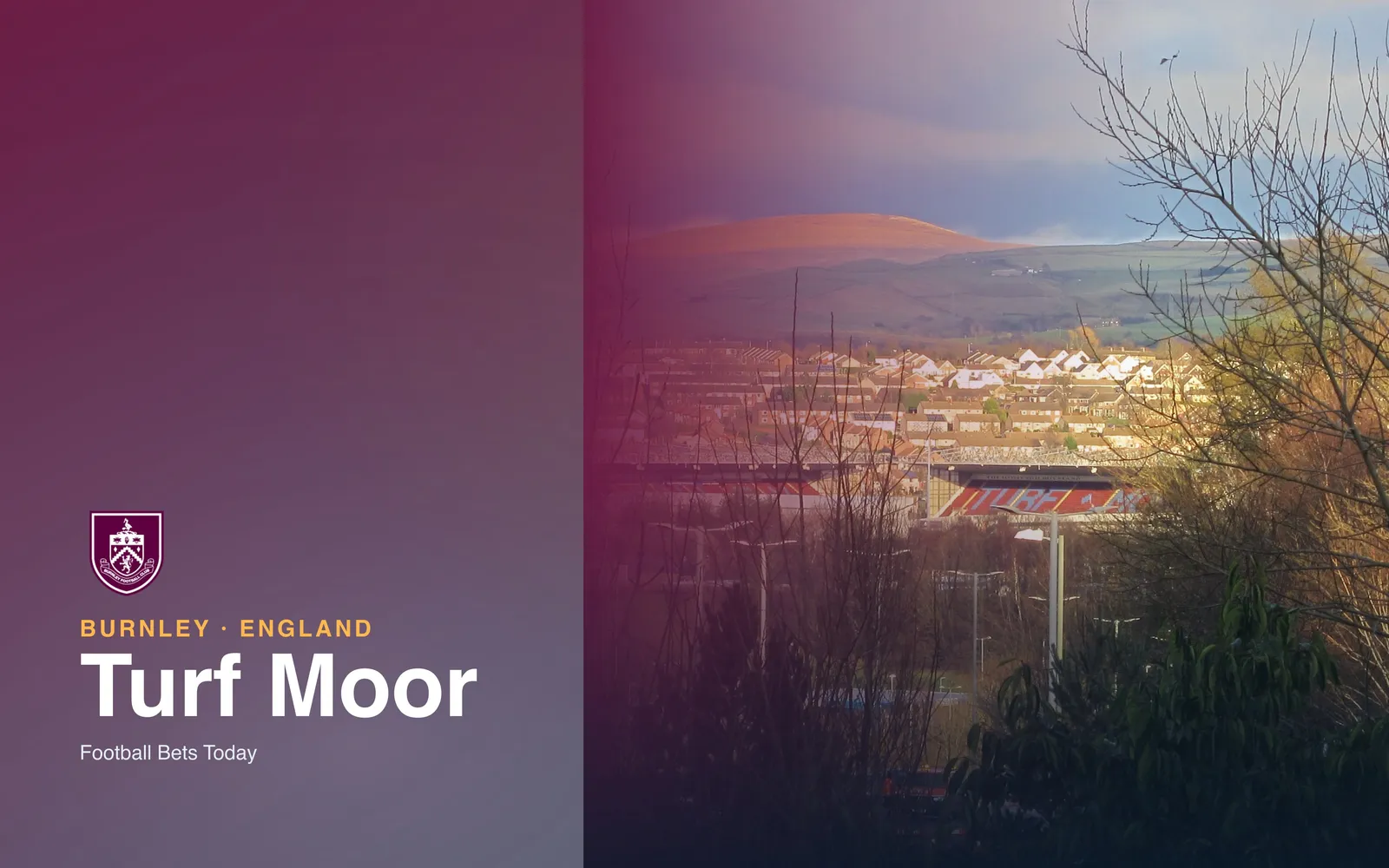
The ground
Facts
| Capacity | 21,944 |
|---|---|
| Opened | 1883 · renovated 1995–96 (all-seater North and Jimmy McIlroy stands); hybrid pitch 2010 |
| Official name | Turf Moor |
| Surface | hybrid |
| Owner | Burnley F.C. (sold 2006, bought back 2013) |
| Record attendance | 54,775 · Burnley v Huddersfield Town, FA Cup third round (1924) |
| Getting there | Harry Potts Way, about 15 minutes' walk from Burnley Manchester Road station; close to the M65 and A671. |
History
Matches it is known for
- 1888 first Football League season
- 1922 FA Cup semi-final
- 1927 England v Wales
- 1960 first European Cup match, Burnley 2–0 Reims
In depth
About Turf Moor
Key takeaways
- Turf Moor is Burnley FC's home ground in Lancashire, England, and has hosted the club since 1883.
- Its listed capacity in 2026 is 21,944, while its record attendance was 54,775 in 1924.
- Burnley Manchester Road station is about a 15 minute walk from the ground.
- Turf Moor is England's second longest continuously used professional football ground, after Deepdale.
Turf Moor is Burnley FC's home football ground in Burnley, Lancashire, England, opened on 17 February 1883. Its listed stadium capacity in 2026 is 21,944, and Burnley FC is the club that calls it home.
For football and soccer followers in Africa, the ground often enters the conversation through an away fixture for a favourite club. The practical details deserve equal attention: the address is Harry Potts Way, Burnley, BB10 4BX, and travelling there means planning beyond Manchester. The guide below explains the stands, railway approaches, historic matches and viewing times that help turn a fixture listing into a proper plan.
What Is the Capacity of Turf Moor?
Turf Moor's listed capacity in 2026 is 21,944, making it a compact ground with a famously close atmosphere. That seated figure belongs to a different stadium era from its record attendance of 54,775, set against Huddersfield Town in the FA Cup on 23 February 1924. For a visitor, the useful distinction is between the ground's overall capacity and the allocation available for a particular fixture. Check the match ticket information before arranging travel around an assumed available seat.
| Detail | Record |
|---|---|
| Capacity | 21,944, listed in 2026 |
| Address | Harry Potts Way, Burnley, BB10 4BX |
| Opened | 17 February 1883 |
| Pitch | 105 by 68 metres; hybrid grass installed in 2010 |
| Record attendance | 54,775 against Huddersfield Town, 23 February 1924 |
| Owner | Burnley FC, following the buyback in 2013 |
Who Plays at Turf Moor?
Burnley play their home fixtures at Turf Moor, which has hosted the club since 1883. Read the competition and venue beside each fixture before booking. The results module records completed matches, while the fixtures module establishes which team is playing, where the game takes place and its scheduled kick off.
How Do You Reach Turf Moor From Manchester or London?
Burnley Manchester Road is about a 15 minute walk from Turf Moor, while Burnley Central is about 20 minutes away. From Manchester Airport, first check the rail journey into Manchester, then the onward connection to Burnley. From Manchester Piccadilly, check the complete itinerary for any station change before boarding the Burnley service. Keep the arrival station visible when choosing a ticket: Manchester Road and Central have different approaches, even though both put the ground within walking distance.
From London, plan the main rail journey into the north west before selecting the Burnley connection. For visitors flying from Lagos, Nairobi, Johannesburg, Accra or Entebbe, allow room for airport formalities and changes between trains. Journey times depend on the service and connections, so use the dated timetable for the complete trip. Local buses provide another approach. Drivers should check matchday parking arrangements before setting out, as nearby spaces and access can be limited.
What Are the Stands at Turf Moor?
Turf Moor has the Bob Lord, Cricket Field, James Hargreaves and Jimmy McIlroy stands. The names matter when finding your entrance, arranging a meeting point or checking the view associated with a ticket. The fixture's ticket instructions should settle your exact entrance and allocation, including which stand your seat is in. Treat a stadium name like a bus destination in Lagos: it gets you to the right place, but you still need the correct stop. Follow the stand and turnstile printed on your ticket.
How Did Turf Moor Become Such a Historic Ground?
Turf Moor's football history began in 1883, following Burnley Cricket Club's arrival on the site in 1843. The cricketers invited the football club to use an adjacent pitch, and the ground opened on 17 February 1883. The next major marker came on 6 October 1888, when Burnley played their first Football League home match and Fred Poland scored their first league goal there. These dates explain its place among football stadiums: it is England's second longest continuously used professional ground, behind Preston North End's Deepdale.
The timeline then widens beyond Burnley fixtures. In 1922, Huddersfield Town beat Notts County by three goals to one in an FA Cup semi final. In 1924, Burnley against Huddersfield produced the record crowd of 54,775. In 1927, England played Wales in the ground's only senior men's international. Ownership changed through a sale in 2006 and Burnley's buyback in 2013. The club also purchased the adjoining cricket ground in 1922.
What Is the Pitch Size and Surface?
Turf Moor's pitch measures 105 by 68 metres, and a hybrid grass system was installed in 2010. The surface combines natural grass with artificial reinforcement, supporting the playing area through repeated use. For television viewers, those standard dimensions are useful context when the surrounding stands make the ground feel compact. Separate the size of the pitch from the closeness of the seating: the camera angle and enclosed setting can influence how much space a player appears to have.
How Do You Arrange Tickets and a Ground Visit?
Check Burnley's official ticket channels for home admission and the visiting club's allocation information for the away end. Start with the fixture date and competition, then read the stand and entry arrangements, along with any purchase requirements, before committing to transport. A stadium tour is a separate visit, so check its availability independently of match tickets. For supporters coming from Africa, the sensible order is to establish admission, confirm the fixture's scheduled time, then arrange the journey. Recheck the details before departure because broadcast scheduling can alter a fixture.
Why Does Turf Moor Matter to African Football Viewers?
Turf Moor matters because it offers African viewers a way into English football through a town's home ground rather than a giant club. In 2003, the ground staged a match between England women and Australia, a reminder that its story reaches beyond Burnley fixtures. For an African viewer accustomed to following the largest clubs, it opens a different route in, through the history carried by its stands.
Use the squad and lineup modules to see which Super Eagles, Black Stars, Harambee Stars, Bafana Bafana or Uganda Cranes players feature for Burnley or the visiting side, rather than assuming an old squad list still applies. That keeps Nigerian, Ghanaian, Kenyan, South African and Ugandan readers focused on the players they follow. For diaspora supporters and students around Manchester, a visit also makes the setting tangible: the walk from the station and the stand names bring it to life, and so does the town around the ground.
How Can Fans Across Africa Follow Turf Moor Matches?
Use the country viewing module for the broadcaster or streaming service carrying each competition in Nigeria, Kenya, South Africa, Ghana and Uganda. Rights depend on the territory and tournament, so a league subscription does not establish access to every cup fixture. Check that information before arranging a viewing centre gathering, visiting a bar or buying access. The fixture module should supply the dated kick off, showing WAT, EAT, SAST and GMT side by side so each reader can read the start time in their own zone.
FAQ
What is the capacity of Turf Moor?
Turf Moor's listed capacity in 2026 is 21,944. Its historical record attendance is 54,775, set against Huddersfield Town in the FA Cup on 23 February 1924.
Who plays at Turf Moor?
Burnley FC play at Turf Moor and have used the ground since 1883. Check the competition and venue beside each fixture for the specific match.
How do I get to Turf Moor?
Take a suitable rail service to Burnley Manchester Road for an approximately 15 minute walk, or Burnley Central for about 20 minutes. From Manchester Airport, Manchester Piccadilly or London, check the complete itinerary and any station change. Drivers should check matchday parking information before departure.
When did Turf Moor open?
Turf Moor opened on 17 February 1883, after Burnley Cricket Club invited the football club to use an adjacent pitch. It is England's second longest continuously used professional football ground, after Deepdale.
What are the stands at Turf Moor?
Turf Moor has four stands: the Bob Lord, Cricket Field, James Hargreaves and Jimmy McIlroy stands. Follow the stand and turnstile printed on your ticket to find the right entrance.
How big is the pitch at Turf Moor?
The pitch measures 105 by 68 metres. A hybrid grass system, combining natural grass with artificial reinforcement, was installed in 2010.
Written by Tunde Akinwande, 2026-11-11.