
Abuja, Nigeria · opened 2003
Capacity 60,491. Who plays here, the matches it is known for, and how to get there.
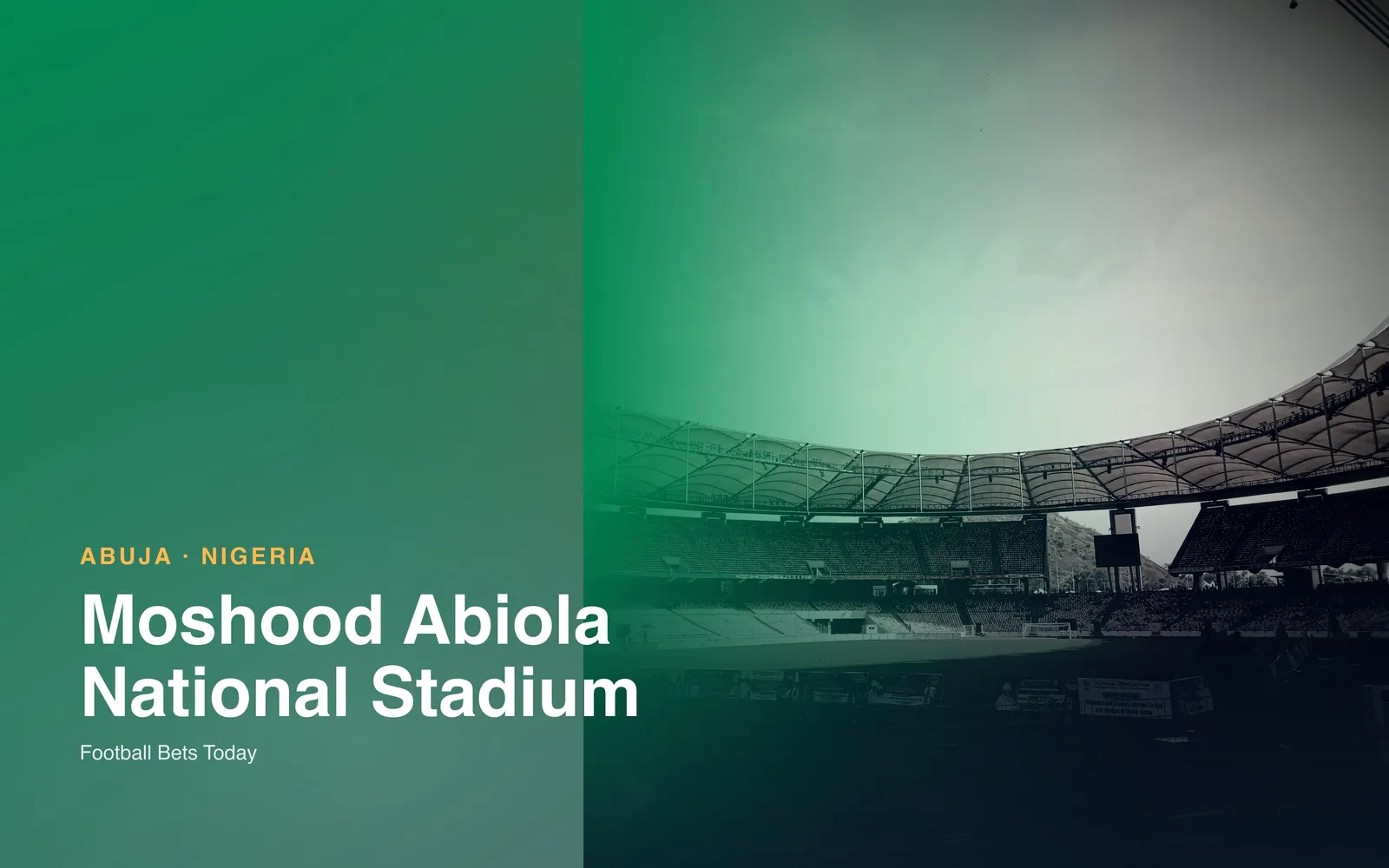
The ground
Facts
| Capacity | 60,491 |
|---|---|
| Opened | 2003 |
| Official name | Moshood Abiola National Stadium, renamed 12 June 2019. Opened as the National Stadium, Abuja (2003–2019). |
| Surface | grass |
| Owner | Federal Government of Nigeria |
| Record attendance | 60,000 · Nigeria v South Africa (2008) |
| Getting there | The Stadium station on the Abuja Rail Mass Transit Yellow line serves the ground. |
History
Matches it is known for
- 2003 All-Africa Games (built for them)
- 2009 FIFA U-17 World Cup, including the final
- 2011 Nigeria v Argentina friendly
- Concerts and religious events
In depth
About Moshood Abiola National Stadium
Key takeaways
- Moshood Abiola National Stadium in Abuja opened in 2003 with a listed football capacity of 60,491.
- The stadium hosted the 2009 FIFA Under 17 World Cup final between Nigeria and Switzerland; check the fixture module for each match’s confirmed venue.
- The stadium is being upgraded under a sports infrastructure programme approved in May 2026, when about N24.6 billion was reported for the Abuja stadium.
- Stadium station on the Abuja Rail Mass Transit Yellow line serves the ground.
- The stadium includes 56 corporate suites and a presidential lounge for 50 guests.
Moshood Abiola National Stadium is Abuja’s national football ground, opened in 2003 with a listed capacity of 60,491 seats. It hosted Nigeria in the 2009 FIFA Under 17 World Cup final, a landmark for African football and soccer followers. The stadium is being upgraded under a sports infrastructure programme approved in May 2026; check the fixture module for each match’s confirmed venue.
For supporters, the useful distinction is between a famous national address and a confirmed match venue. Nigeria’s 2009 Under 17 finalists and the Bafana Bafana side involved in the record crowd on 1 June 2008 give supporters across Africa a connection to Abuja. The ground’s history explains its importance, while the fixture venue, admission arrangements and transport information determine whether you should travel.
What Is the Capacity of Moshood Abiola National Stadium?
The stadium’s listed football capacity is 60,491, dating from its opening in 2003, with seating beneath a lightweight roof. The published tier descriptions give approximately 32,000 places below and 28,000 above. Those rounded tier figures should not be treated as an exact reconciliation of the overall capacity. For a visitor, the distinction between tiers matters because the ticketed entrance and seating area determine your route through a substantial stadium bowl.
Who Plays at the Abuja Ground?
Nigeria faced Switzerland at the stadium in the 2009 FIFA Under 17 World Cup final, and the Super Eagles faced South Africa here on 1 June 2008. These fixtures connect Abuja with Nigerian football across age groups. Read the venue field beside the competition and kick off time in the fixture module, then check the organiser’s event announcement before arranging transport or accommodation.
The sports infrastructure programme approved in May 2026 provides for an upgrade of the Abuja stadium, supporting its role as a setting for football and other sporting events. For Nigerian players and supporters, that investment forms another chapter in a venue whose history includes continental competition and a global youth final. The named venue on each fixture tells you where that particular match belongs.
| Ground | What Supporters Should Know |
|---|---|
| Moshood Abiola National Stadium, Abuja | Hosted the 2009 FIFA Under 17 World Cup final; the stadium is being upgraded under a sports infrastructure programme approved in May 2026. |
| Venue named in the fixture module | Check the venue field for each match, then confirm admission arrangements before planning your journey. |
How Do I Get to Moshood Abiola National Stadium?
Stadium station on the Abuja Rail Mass Transit Yellow line serves the ground. Check operating hours and the return service before choosing rail, particularly for an evening event. A station bearing the stadium’s name does not establish which entrance your ticket requires. Confirm the walking route and gate separately, allowing for any event restrictions around the complex.
Taxis and ride hailing provide another option. Give the driver the stadium name and your confirmed entrance, then agree a collection point that remains reachable after the event. Build extra time into the outward journey for traffic and security checks. Keep your ticket accessible, check the organiser’s bag instructions and follow steward directions where vehicle access changes.
Why Does the Ground Have So Many Names?
The ground opened in 2003 as National Stadium, Abuja and was renamed Moshood Abiola National Stadium on 12 June 2019 in honour of M.K.O. Abiola. Older match reports can therefore use its former name without describing another venue. When comparing football stadiums, check the city and event address alongside the name.
Which Matches Made Abuja Part of Football History?
The stadium was built from September 2000 to April 2003 for the eighth All Africa Games and officially opened on 8 April 2003. Abuja then hosted the Games in October 2003, giving the capital a venue associated with continental competition from its opening year. Its football story later reached a world audience through the 2009 FIFA Under 17 World Cup, including the final.
The defining match is Nigeria’s final against Switzerland on 15 November 2009, which Switzerland won by a single goal. For Nigerian supporters, that result places the ground within the country’s long conversation about youth talent and the route towards the Super Eagles. The recorded attendance high is 60,000 for Nigeria against South Africa on 1 June 2008, giving Bafana Bafana supporters their own connection. Nigeria also faced Argentina here in June 2011.
What Does the 2026 Upgrade Plan Change?
The May 2026 announcement reported about N24.6 billion for an Abuja stadium upgrade within a wider national sports infrastructure programme. The investment provides for improvements to the stadium’s sporting facilities and adds to its history as a venue for Nigerian and African sport.
For a supporter, approval, completed construction and permission to stage a particular fixture are separate milestones. The practical test is a confirmed event announcement naming Abuja, supported by admission information. A photograph of work taking place or an announcement about investment cannot supply that confirmation. Before travelling, check the fixture venue and the latest event arrangements rather than treating the renovation budget as an opening timetable.
What Are the Stadium’s Main Design Features?
The stadium’s lightweight roof and seating bowl form the centrepiece of the wider sports complex. Schlaich Bergermann Partner contributed to its design.
The stadium includes 56 corporate suites and a presidential lounge for 50 guests. These spaces complement the main seating tiers within a complex built to welcome major sporting occasions. For match attendance, use your ticket’s seating area and confirmed entrance to plan your arrival.
What Else Is Inside the Abuja Stadium Complex?
The complex developed for 2003 includes a velodrome, indoor sports hall, gymnasium, swimming pool, tennis courts, hockey stadium and baseball and softball facilities. This explains why an address naming the stadium can refer to an activity outside the football bowl. Check the exact building or arena on your admission information before asking a driver to leave you at the complex.
Who Was M.K.O. Abiola, and Why Does the Name Matter?
M.K.O. Abiola was the presumed winner of Nigeria’s presidential election held on 12 June 1993, whose result was annulled. He died on 7 July 1998. Renaming the stadium on 12 June 2019 connected a national sporting venue with a date carrying deep significance in Nigerian public memory. For visiting supporters, understanding that connection explains why the full name means more than a change on a stadium sign.
How Can Fans Across Africa Follow Matches in Abuja?
Supporters in Nigeria, Kenya, South Africa, Ghana and Uganda should start with the fixture’s confirmed venue and country specific viewing information. Broadcast availability belongs in the viewing module because rights vary by competition and territory. Read WAT for Nigeria, EAT for Kenya and Uganda, SAST for South Africa, and GMT for Ghana. These labels let a viewing centre in Lagos and a household in Kampala plan around the same match.
For an Abuja visit, obtain tickets through the event organiser’s announced route and check whether admission uses a digital ticket or collection arrangement. Choose your return transport before entering, and leave time for the security process without assuming that every gate will open. Before setting off, check the venue, your entrance and the return journey together.
FAQ
What is the capacity of Moshood Abiola National Stadium?
Its listed football capacity is 60,491, dating from its opening in 2003. The published lower and upper tier figures are rounded descriptions of the seating arrangement.
Who plays at Moshood Abiola National Stadium?
Nigeria played Switzerland here in the 2009 FIFA Under 17 World Cup final, and the Super Eagles faced South Africa here on 1 June 2008. Check the fixture module’s venue field to confirm where each match will be played.
How do I get to Moshood Abiola National Stadium?
Use Stadium station on the Abuja Rail Mass Transit Yellow line, or travel by taxi or ride hailing. Confirm rail operating hours, your entrance and event traffic arrangements before leaving.
When was Moshood Abiola National Stadium renamed?
The ground was renamed Moshood Abiola National Stadium on 12 June 2019 in honour of M.K.O. Abiola. Its previous name was National Stadium, Abuja.
What is the record attendance at Moshood Abiola National Stadium?
The recorded attendance high is 60,000 for Nigeria against South Africa on 1 June 2008, connecting the ground’s history with both the Super Eagles and Bafana Bafana.
Written by Tunde Akinwande, 2026-11-11.