
Manchester, England · opened 2002
Capacity 53,400. Who plays here, the matches it is known for, and how to get there.
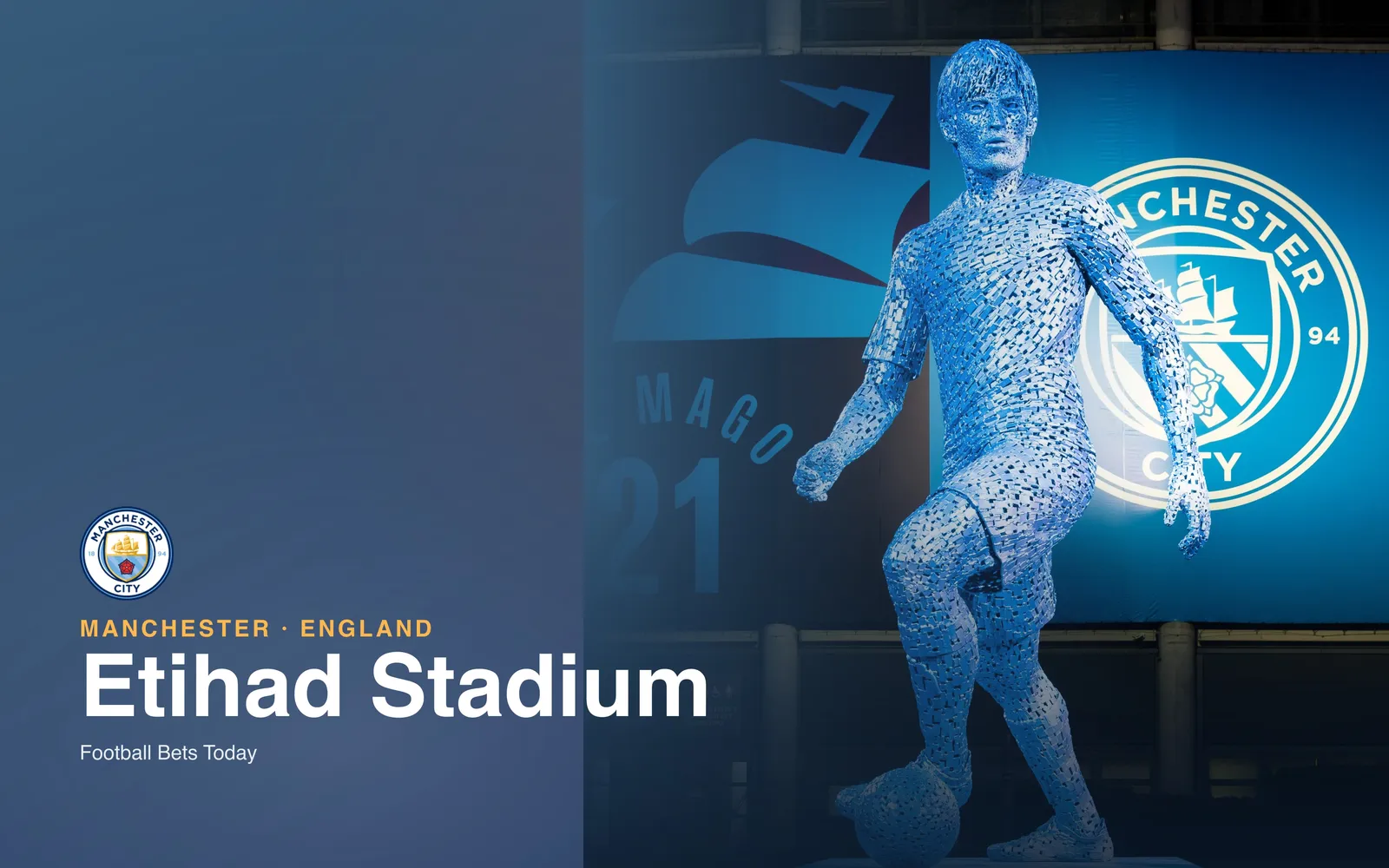
The ground
Facts
| Capacity | 53,400 |
|---|---|
| Opened | 2002 · renovated Converted for football in 2002–03; North Stand expansion works from 2024. A larger capacity of about 60,000 is reported for 2026; verify |
| Official name | Etihad Stadium, named for Etihad Airways since July 2011; originally City of Manchester Stadium (Eastlands) |
| Surface | hybrid |
| Owner | Manchester City Council (leased to Manchester City) |
| Record attendance | 54,693 · Manchester City v Leicester City, 6 February 2016; later figures reported for 2026 are unverified (2016) |
| Getting there | Etihad Campus Metrolink tram stop beside the ground; about 20 minutes' walk from Ashton Old Road, or from Manchester Piccadilly station. |
History
Matches it is known for
- Main stadium of the 2002 Commonwealth Games in Manchester
- Manchester City's first match there in August 2003 after leaving Maine Road
- 2008 UEFA Cup final: Zenit St Petersburg 2–0 Rangers
- 2012 London Olympics football matches
- Sergio Agüero's title-winning goal v QPR, 13 May 2012
In depth
About Etihad Stadium
Key takeaways
- The Etihad Stadium is Manchester City’s home in east Manchester, originally called the City of Manchester Stadium.
- The listed domestic football capacity is 61,038 following the North Stand expansion; older figures describe earlier configurations.
- The ground opened for the Commonwealth Games in 2002 and welcomed Manchester City in 2003.
- Etihad Campus is the Metrolink stop for the stadium, while airport arrivals should allow time for their onward journey.
Etihad Stadium is Manchester City’s football ground in east Manchester, England, with a listed domestic capacity of 61,038 following the North Stand expansion. It is the same venue as the City of Manchester Stadium and Eastlands, familiar names to football and soccer followers across Africa.
For readers in Lagos, Nairobi, Johannesburg, Accra and Kampala, understanding its changing capacity, transport links and Commonwealth Games beginnings helps with planning a Manchester visit. Its African story belongs here too, especially the midfield authority of Yaya Touré and the early senior career of Nigeria’s Kelechi Iheanacho.
What Is the Capacity of Etihad Stadium?
The Etihad Stadium capacity listed for domestic football is 61,038, approximately 61,000 following the North Stand expansion. Capacity is the number available under a particular stadium arrangement; attendance counts the people at an individual event. A concert layout can therefore produce a different figure from a Premier League match without either number describing the ground incorrectly.
The building has grown through several distinct stages. Conversion for football brought capacity to about 48,000 in 2003, while the South Stand extension lifted it to roughly 55,000 for the 2015 to 2016 season. The North Stand project explains the later rise towards 61,000. When searching for Etihad Stadium Manchester capacity, read the year alongside the number. Historical attendance records in the records module also need their match date, because a larger stand changes what the ground can accommodate.
| Year | Configuration | Approximate Capacity |
|---|---|---|
| 2003 | Converted for football | 48,000 |
| 2015 | Expanded South Stand | 55,000 |
| 2026 | Listed domestic capacity after North Stand expansion | 61,038 |
Who Plays at Etihad Stadium?
Manchester City men are the stadium’s principal football tenants, having made it their home in 2003. Read the venue field in the fixtures module before choosing your route or buying a ticket.
The ground has also staged England internationals, European finals and rugby, alongside concerts that change the pitch area into an audience space. For African readers, its club identity carries particular memories. Ivory Coast midfielder Yaya Touré and Nigeria forward Kelechi Iheanacho both played for City. Iheanacho gives Nigerian supporters a direct Super Eagles connection to the stadium, beyond the wider appeal of following an English Premier League club.
How Do I Get to Etihad Stadium?
Etihad Campus Metrolink stop serves the stadium, approximately 2.5 kilometres east of Manchester city centre. From the centre, check the tram destination and service information before boarding, especially when crowds are travelling together. Walking from Manchester Piccadilly is another option, although the often quoted 20 minute estimate should not become a tight arrival plan. Allow extra time for your walking pace, road crossings and finding the entrance printed on your ticket.
If you fly into Manchester Airport from Africa, plan the airport journey and the stadium journey separately. Check the journey planner for your arrival date rather than assuming a direct stadium service. Arrange a designated space beforehand if driving. Leave room in the schedule for queues after the final whistle.
Why Do City of Manchester Stadium, Eastlands and Etihad Mean the Same Ground?
City of Manchester Stadium, Eastlands and Etihad refer to the same Manchester venue, with each name reflecting a different part of its story. City of Manchester Stadium was its original name, while Eastlands became the informal shorthand associated with its location. The Etihad name arrived in July 2011 through a naming rights agreement. Older match reports and supporters’ conversations can therefore use different names without describing different grounds.
Adding Manchester to a search helps keep travel information, capacity figures and event listings attached to the English ground. The wider football stadiums guide helps distinguish venues by city and tenant. For a visitor, the useful habit is simple: match the city and full venue address to the event confirmation before booking accommodation or onward transport.
How Did a Commonwealth Games Venue Become City’s Home?
The stadium opened on 25 July 2002 for the Commonwealth Games before being converted into Manchester City’s home in 2003. Athletics required a different layout: the Games configuration held about 38,000 seats, rising to approximately 41,000 with temporary seating. The football conversion removed the running track and lowered the playing surface, creating room for a lower seating tier. That work explains why the earliest photographs look different from the ground familiar to Premier League viewers.
The conversion cost more than £40 million, with £22 million contributed by the council and £20 million by Manchester City. Those figures concern the football conversion, rather than the entire original construction. City’s first football match there was a friendly against Barcelona on 10 August 2003, which the hosts won by two goals to one. The South Stand enlargement in 2015 and the subsequent North Stand redevelopment continued that process of adapting the Commonwealth Games venue for football crowds.
Which Matches and Major Events Define the Etihad?
Its wider event history includes the 2008 UEFA Cup final, when Zenit St Petersburg beat Rangers by two goals to nil before 43,878 spectators. The stadium also staged Women’s Euro matches in 2005 and an England group match at the Rugby World Cup in 2015. Concerts began in 2004, with Oasis drawing a reported concert record of 60,000 in 2005. The ground is also listed for Euro 2028, extending its place in international tournament planning.
What Should Visitors Know About Tours and the Etihad Campus?
A stadium tour offers a way to explore the Etihad when your Manchester visit does not coincide with a match. Check the advertised itinerary for museum or exhibition access, because access to individual spaces can depend on events and stadium operations. Book the experience that matches your interests rather than assuming every tour includes the same areas. For match tickets, confirm the competition, date, venue and seat location together before committing to travel.
The surrounding SportCity district helps explain why the stadium feels like part of a broader sporting neighbourhood. It includes the Manchester Velodrome and National Squash Centre. Give yourself time to understand the site instead of treating every building as part of the main stadium. Comfortable walking shoes and a clear meeting point are useful when a group arrives through different transport connections.
How Do Fans Across Africa Follow Etihad Matches?
Readers in Nigeria, Kenya, South Africa, Ghana and Uganda should read each fixture’s local kick off time alongside its competition and venue. Ghana uses GMT, Nigeria WAT, South Africa SAST, and Kenya and Uganda EAT. Britain’s seasonal clock changes alter the difference from Manchester, while those African time zones remain unchanged. A conversion checked for one part of the English season should therefore be checked again for a later fixture.
When arranging to watch with friends in Lagos, Accra, Nairobi, Kampala or Johannesburg, agree the time and place beforehand. Use the country viewing information for the specific fixture to check coverage and subscription requirements. If travelling to Manchester, keep the stadium’s local time beside your home time, then check your return transport before leaving for the ground.
FAQ
What is the capacity of Etihad Stadium?
The listed domestic football capacity is 61,038 following the North Stand expansion.
Who plays at Etihad Stadium?
Manchester City men play their home football at the Etihad Stadium. Check the named venue for each fixture before arranging travel.
How do I get to Etihad Stadium?
Take Metrolink to Etihad Campus or plan a walk from Manchester Piccadilly with ample arrival time. Airport arrivals should check the required connections, while drivers should arrange designated parking before travelling.
Are Etihad Stadium and City of Manchester Stadium the same ground?
Yes. City of Manchester Stadium was the ground’s original name, Eastlands is an informal name, and the Etihad name arrived in July 2011.
Written by Tunde Akinwande, 2026-11-11.