
Leeds, England · opened 1897
Capacity 37,645. Who plays here, the matches it is known for, and how to get there.
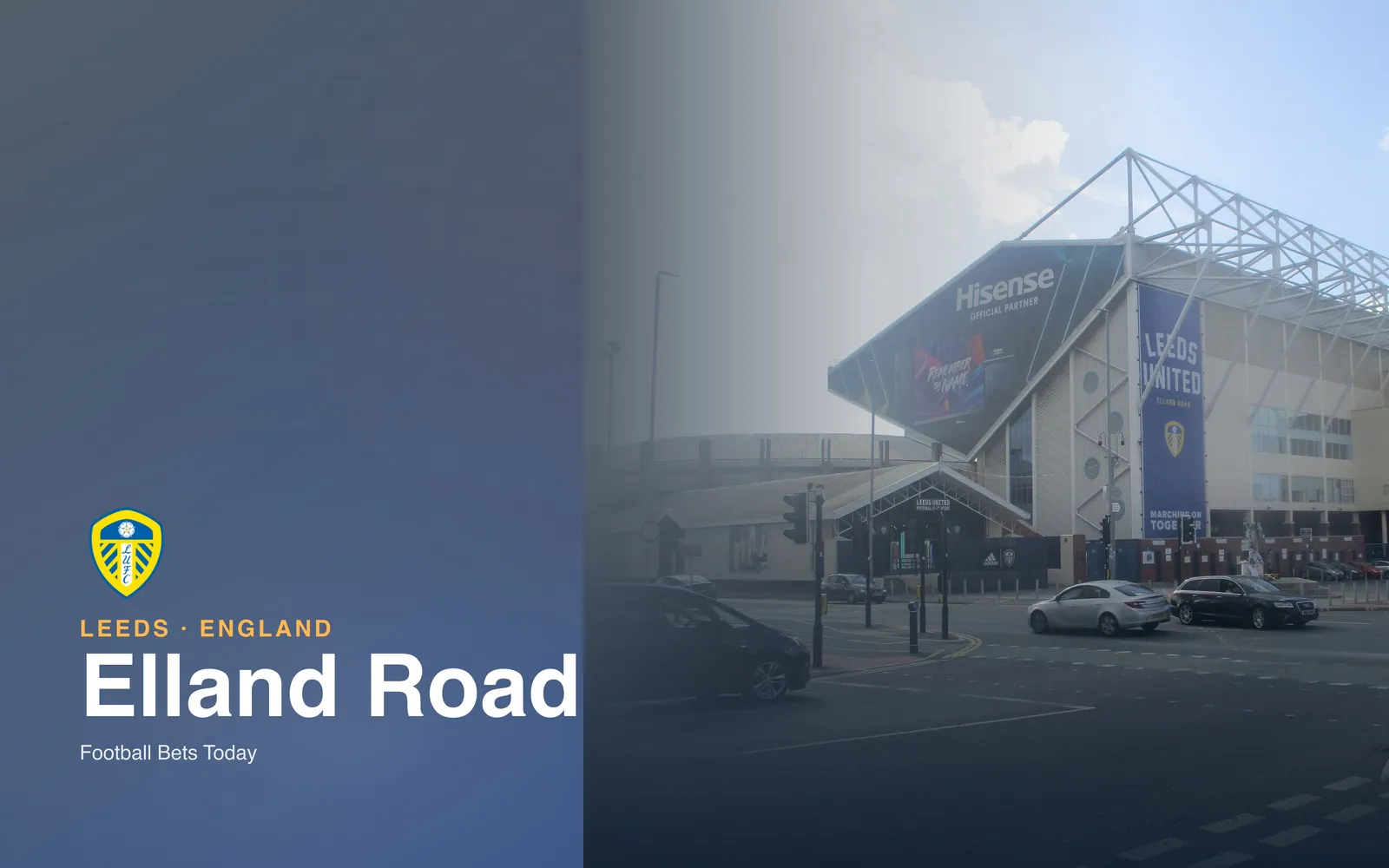
The ground
Facts
| Capacity | 37,645 |
|---|---|
| Opened | 1897 · renovated Major works 1994, 2006 and 2011-12; West Stand expansion began June 2026 (planned capacity about 53,000, due 2030) |
| Official name | Elland Road |
| Surface | hybrid |
| Owner | Leeds United (club regained full ownership July 2024) |
| Record attendance | 57,892 · Leeds United v Sunderland, FA Cup fifth-round replay (1967) |
| Getting there | Leeds and Cottingley railway stations, local buses and the Leeds park and ride; the ground is beside the M621 and the A643. |
History
Matches it is known for
- Nine FA Cup semi-finals, 1910 to 1995
- Three matches at Euro 96
- Rugby League World Cup matches 1989-92 and 2021
- 1997 Great Britain v Australia Super League Test decider
- UEFA Cup semi-final v Galatasaray 2000
- First televised game 1965
In depth
About Elland Road
Key takeaways
- Elland Road is Leeds United’s home ground in Beeston, Leeds, and the club has played there since 1919.
- The stadium has a capacity of about 37,645 (37,633 in another published figure).
- The stadium’s record crowd was 57,892 for Leeds United against Sunderland on 15 March 1967.
- Lucas Radebe and Albert Johanneson give Elland Road a lasting connection with South African football, shared by supporters across Africa.
Elland Road is Leeds United’s football ground in Beeston, Leeds, with a capacity of about 37,645 (37,633 in another published figure). Leeds United have played there since their formation in 1919, making Elland Road Stadium a familiar name to football and soccer followers across Africa.
For South African readers, the strongest introduction may be Lucas Radebe, whose association with Leeds lasted well beyond his playing career. For a visitor arriving from Lagos, Nairobi, Accra or Kampala, the practical questions come first: which stand, which route from the station, and what time to arrive. The stadium’s size, history and African connections help explain why the journey matters.
What Is the Capacity of Elland Road?
Elland Road’s capacity is about 37,645, with 37,633 also appearing in published reference material. Both figures describe the existing ground, rather than the proposed expansion. The difference is small, but worth acknowledging when comparing stadium guides or checking an Elland Road seating plan. Available tickets for an individual match are a separate matter and should be checked through the relevant ticket allocation.
Plans announced in September 2024 aim to increase capacity to about 53,000, mainly through changes to the North and West stands. The existing ground belongs among England’s substantial club venues, although any precise national ranking needs a dated comparison that states whether national stadiums are included. The proposed capacity would change that comparison considerably, so distinguish the stadium you can visit from the completed redevelopment.
Who Plays at Elland Road?
Leeds United have made Elland Road their home since 1919, and their fixtures provide its regular football calendar. For a visit, use the fixture module to establish the competition, date and scheduled start before arranging transport.
England internationals have also brought crowds through the gates. England men beat Costa Rica there in 2018, while England women beat the Netherlands in 2022. Its tournament history includes European Championship football. The event matters when choosing a seat, so always check the seating plan published for the specific fixture, even when the stand names remain familiar.
How Do You Get to Elland Road From Leeds Station?
From Leeds station, walking and taxis are the options to weigh first, and you should check the official matchday travel notice for any other services on the day. Confirm the departure point, operating times and return arrangements for your particular fixture. A first visit is easier when the return journey is settled before arrival, especially after an evening match. Nearby bus stops and boarding arrangements can change around events, so a normal weekday journey planner may need checking against matchday notices.
Walking gives you an alternative when traffic builds, provided the route and weather suit your party. A taxi is convenient with luggage, but journey time and price depend on queues and road conditions; request an estimate before travelling. Whatever you choose, check the official matchday travel notice for the latest arrangements, including whether services run late enough for the match and any possibility of extra time.
What Are the Main Stand Names at Elland Road?
Two stand names are especially worth knowing at Elland Road. The Kop carries the name of Don Revie, and the South Stand carries the name of Norman Hunter. Match the stand, block and entrance printed on your ticket with the event’s seating plan. Seat totals by stand can change with redevelopment and allocation, so use the published plan for the fixture you are attending.
Together, these names put Leeds history into the ordinary business of finding your seat. When searching for Leeds United stadium tickets, check the sales window, eligibility and accessibility arrangements before committing to flights or accommodation; a stadium visit and a match ticket are separate bookings.
| Stand | Seating Information | Named After |
|---|---|---|
| The Kop | Check the event seating plan | Don Revie |
| South Stand | Check the event seating plan | Norman Hunter |
How Did Elland Road Become Such a Famous Ground?
Elland Road opened in 1897 with Holbeck Rugby Club as its first occupant, and Leeds United bought it from Yorkshire Amateurs for £250 in 1920. The buildings tell the later story. The South Stand replaced the Scratching Shed in 1974, while the East Stand opened during the 1993 to 1994 season. Conversion to an all seated ground followed in the 1994 to 1995 season, and the South Stand received Norman Hunter’s name in 2020.
The defining crowd remains the 57,892 who watched Leeds face Sunderland in an FA Cup fifth round replay on 15 March 1967. The record of 57,892 was set on 15 March 1967, long before the all-seater ground of 1994 to 1995, and should never be confused with modern capacity. Elland Road later hosted Spain’s group matches at Euro 96, drawing with Bulgaria and France before beating Romania. For a first visitor, the appeal is hearing how the home support gathers around the match.
What Will the Elland Road Redevelopment Change?
The redevelopment aims to enlarge Elland Road to about 53,000 seats, with planning approval recorded in January 2026. The North and West stands are the main focus, and the programme is expected to extend to about 2030. That is a project timetable rather than a promise of completion on a particular date. Read the expansion as a sequence of works, with the final capacity describing the intended finished stadium rather than every intermediate stage.
For visitors, phasing matters because construction can affect approaches, entrances and the seating offered for individual events. Check the access instructions supplied with your ticket instead of relying on photographs from an earlier visit. Across football stadiums, a familiar ground can require unfamiliar arrival arrangements while work proceeds. Allow extra time to find your entrance, and check accessible routes directly if steps, walking distances or temporary diversions could affect your journey.
Why Does Elland Road Matter to African Fans?
Lucas Radebe gives Elland Road its strongest South African connection, having joined Leeds in 1994 and remained until his retirement in 2005. The Bafana Bafana legend played more than 200 games for the club, and his testimonial took place at the ground on 2 May 2005.
Albert Johanneson provides an earlier connection through his Leeds career. A Leeds mural unveiled in 2020 brought Johanneson and Radebe together with Kalvin Phillips, a story shared by African supporters and made visible beyond the stadium. Supporters in Nigeria, Kenya, Ghana and Uganda follow Leeds through the same fixture coverage and local kick-off conversions as fans in South Africa, so Radebe and Johanneson give them a common reference point when they gather to watch. For visitors combining football with study, work or family travel, it offers a meaningful starting point for exploring the club’s place in Leeds.
How Can Fans Across Africa Follow Matches at Elland Road?
Readers in Lagos, Nairobi, Johannesburg, Accra and Kampala can use the fixture module in their local time and check the viewing information attached to the competition. Kick off times convert to GMT in Accra, WAT in Lagos, EAT in Nairobi and Kampala, and SAST in Johannesburg. Britain changes its clocks seasonally, so the difference from a UK kick off changes during the year. A converted fixture time is more dependable than remembering the hour used for an earlier match.
For a sports bar or viewing centre gathering, confirm the local start and available coverage before setting out. If travelling to Leeds, check the fixture again before departure because television scheduling can alter arrangements. Keep the ticket, stadium entrance instructions and return transport details together, much as you would keep a journey’s connections together at a busy terminal. Before leaving your accommodation, check the event notice and save the route back to Leeds station.
FAQ
What is the capacity of Elland Road?
Elland Road has a capacity of about 37,645 (37,633 in another published figure). The redevelopment approved in January 2026 aims to increase capacity to about 53,000.
Who plays at Elland Road?
Leeds United have played at Elland Road since their formation in 1919. The stadium has also hosted England internationals, including England men against Costa Rica in 2018 and England women against the Netherlands in 2022.
How do I get to Elland Road?
From Leeds station, consider walking or a taxi, and check the official matchday travel notice for other services. Confirm current operating times, event bus stops and return arrangements before travelling.
What is the record crowd at Elland Road?
The record of 57,892 was set on 15 March 1967, when Leeds United faced Sunderland in an FA Cup fifth round replay. That was long before the all-seater ground of 1994 to 1995.
Why does Elland Road matter to African fans?
Lucas Radebe played for Leeds from 1994 to 2005, and Albert Johanneson also played for the club. A Leeds mural unveiled in 2020 honours them with Kalvin Phillips, a story shared by supporters from South Africa to Ghana, Uganda, Kenya and Nigeria.
Written by Tunde Akinwande, 2026-11-11.