
Cairo (Nasr City), Egypt · opened 1960
Capacity 75,000. Who plays here, the matches it is known for, and how to get there.
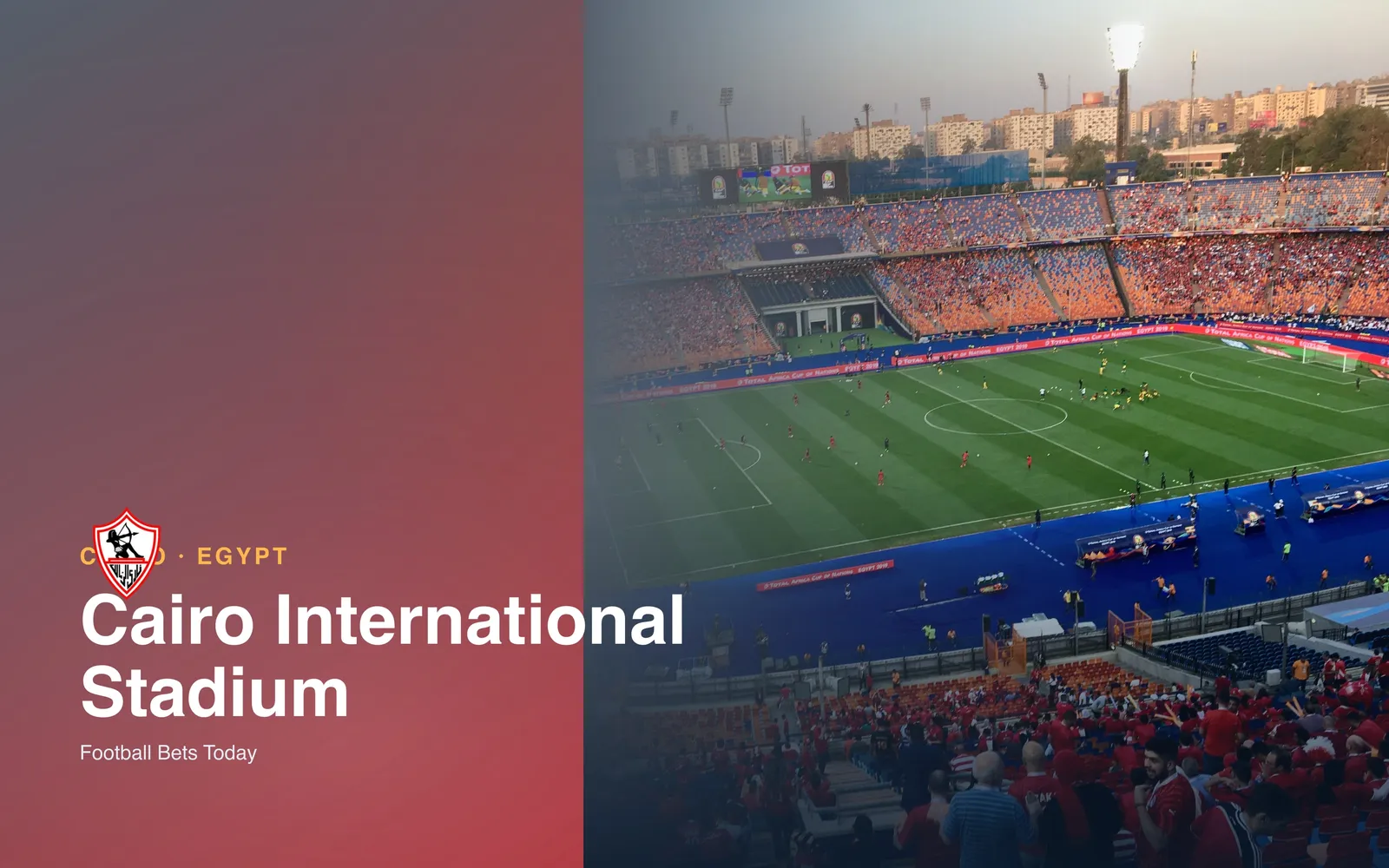
The ground
Facts
| Capacity | 75,000 |
|---|---|
| Opened | 1960 · renovated 2005 (before the 2006 Africa Cup of Nations) and 2019 |
| Official name | Cairo International Stadium (formerly Nasser Stadium); no sponsor name |
| Surface | hybrid |
| Record attendance | 130,000 · 1969 (unverified, flagged as needing a citation) (1969) |
| Getting there | Cairo Metro Line 3 (Stadium and Fair Zone stations) and the Stadium monorail station. |
History
Matches it is known for
- 1991 All-Africa Games main stadium
- 2006 Africa Cup of Nations final: Egypt 0–0 Ivory Coast, Egypt won 4–2 on penalties
- 2009 FIFA U-20 World Cup final: Ghana beat Brazil on penalties
- 2019 Africa Cup of Nations final: Algeria 1–0 Senegal
In depth
About Cairo International Stadium
Key takeaways
- Cairo International Stadium is the third largest stadium in Egypt, in Nasr City, opened on 23 July 1960.
- Its listed capacity in 2026 is 75,000, with seating throughout the ground.
- Egypt, Zamalek and Al Ahly use the stadium.
- Ghana became the first African winners of the FIFA U-20 World Cup at Cairo Stadium in 2009.
- Stadium station on Cairo Metro Line 3 provides a rail approach to the ground.
Cairo International Stadium is the third largest stadium in Egypt, in Nasr City, Cairo, opened on 23 July 1960. Its listed capacity in 2026 is about 75,000, all seated, for a ground central to African football and soccer history.
A stadium address can look straightforward until you are choosing an entrance with a crowd gathering around you. Knowing the names, transport options and ticket instructions helps make the journey manageable. Cairo also rewards a little historical preparation: Ghana lifted a world trophy here in 2009, while Egypt’s continental finals gave the ground a place in memories far beyond the city.
Why Is Cairo International Stadium Also Called Nasser Stadium?
Nasser Stadium was the former name of the ground, honouring President Gamal Abdel Nasser. He inaugurated the ground on 23 July 1960, the eighth anniversary of Egypt’s 1952 revolution. Both names refer to the same venue in Nasr City. If you search for Cairo International Stadium Egypt when arranging a visit, match the result to the stadium address and your ticket entrance before setting off.
Who Plays at Cairo International Stadium?
The Egypt national team, Zamalek and Al Ahly use Cairo International Stadium. Its connection with all these teams dates to 1960. For the Pharaohs, it is a setting associated with home support and continental finals; for the clubs, it provides a stage for domestic rivalry and African competition. Regular use by these sides is a general pattern, so each fixture still needs its own venue check.
Read the venue field in the fixtures module before booking transport or accommodation, then check the organiser’s match announcement. The same care applies to any ticket: the competition and date should match the entrance printed on it. For supporters comparing football stadiums across Africa, Cairo’s distinction is how national team occasions and club football share one ground, giving different generations their own reason to recognise its name.
What Is the Capacity of Cairo International Stadium?
Cairo International Stadium’s listed capacity in 2026 is 75,000, all seated. The 74,100 figure associated with the 2006 AFCON final is that match’s recorded attendance, so it should not automatically replace the seating capacity. Attendance describes how many spectators were recorded for an event; capacity describes the ground’s stated accommodation. That distinction matters when older match reports and stadium listings appear to give different answers to the same question.
Historical attendance figures need separate treatment: the 1986 AFCON final is recorded with 95,000 spectators. A 1969 attendance of 130,000 is reported on the encyclopaedia page without a citation, so treat it with caution. For planning a visit, use the ticket allocation and seating instructions for your match, rather than any historical crowd figure.
| Figure | Year or Context | Meaning |
|---|---|---|
| 75,000 | 2026 listing | Listed all seated capacity |
| 74,100 | 2006 AFCON final | Recorded match attendance |
| 95,000 | 1986 AFCON final | Historical match attendance |
How Do I Get to Cairo International Stadium?
Cairo Metro Line 3 serves the stadium area through Stadium station, with Fair Zone another nearby option. The ground lies in Nasr City, about 10 km from downtown Cairo and about 10 km west of Cairo International Airport. From downtown, identify your nearest Metro connection, join Line 3 and travel to Stadium station. Once outside, follow the entrance named on your ticket; reaching the stadium district is only part of reaching your seat.
From the airport, a taxi or ride hailing journey to your designated stadium entrance is a straightforward option. If choosing public transport, check the airport connection to Line 3 before travelling, rather than assuming an airport terminal has a direct Metro departure. A Stadium monorail station is also listed for the venue, but confirm operating services and interchange details for your travel date. Leave extra time, since trains and roads both fill up and the walk to the gate takes longer than the map suggests.
Which Dates Shaped Cairo Stadium’s History?
Construction ran from 1955 to 1960, establishing the ground that Nasser opened that July. Its 1986 AFCON final ended Egypt 0, Cameroon 0, with Egypt winning the penalty shootout 5 to 4 on 21 March. The stadium later served as the main venue of the 1991 All Africa Games. Renovation followed in 2005 ahead of the 2006 AFCON, linking another major stage of its development to a continental tournament.
The 2006 final brought another Egyptian shootout victory after a goalless draw, this time 4 to 2 against Ivory Coast. In 2009, Cairo hosted the FIFA U-20 World Cup semi finals, third place match and final. Further renovation came in 2019 before another AFCON final: Algeria beat Senegal 1 to 0 on 19 July. Read together, these dates explain why the stadium carries memories across several generations of African supporters.
Which African Football Stories Belong to Cairo Stadium?
Ghana’s 2009 triumph gives Cairo Stadium a special place in African youth football. Ghana beat Brazil in the FIFA U-20 World Cup final and became the tournament’s first African champions. That achievement belongs to the young players who made the breakthrough, and Ghanaian readers can set it beside the senior team’s own history.
South Africa’s defining Cairo memory arrived on 6 July 2019, when Thembinkosi Lorch scored in the 85th minute against Egypt. Bafana Bafana won that AFCON round of 16 match 1 to 0 against the hosts. A day earlier, Uganda’s Cranes had lost 1 to 0 to Senegal here, with Sadio Mané scoring in the 15th minute. Each result belongs to a different national football memory, played out on the same pitch.
What Should Visitors Know Before Matchday?
Start with the official club, federation or competition ticket announcement, then follow its designated purchasing route. Read the admission instructions and any identification requirements before travelling. Arrive well before kick off, allowing time for the final walk and entry checks. Nasr City is the surrounding district, but a general neighbourhood destination is less useful to a driver than the entrance details supplied for your match.
The ground is a large multi use stadium, so your seat location helps determine the view and the walk inside. Keep your ticket accessible and agree a meeting point with companions before joining the entrance queue. Plan the return journey as carefully as the outward trip, especially when the crowd leaves together. Save the accommodation address and transport details before departure so that a busy exit does not become a search for basic information.
How Can Fans Across Africa Follow Matches From Cairo?
Coverage differs between domestic football, continental club matches and national team tournaments, so a channel showing one match does not mean another is shown. Ghanaian viewers have the 2009 Under 20 triumph to look back on, South Africans have Thembinkosi Lorch’s 2019 winner against Egypt, and Ugandans have the Cranes’ 2019 meeting with Sadio Mané’s Senegal. Nigerian and Kenyan viewers can scan the Al Ahly and Zamalek squad lists for Super Eagles and Harambee Stars players when those clubs appear in continental matches. Look up the broadcast listing for your country before inviting friends over or heading to a viewing centre.
Read kick off times in WAT, EAT, SAST and GMT together in the fixtures module, selecting the zone that matches your location. Viewers in Nigeria follow WAT, those in Kenya and Uganda follow EAT, readers in South Africa follow SAST, and fans in Ghana follow GMT. Use that converted time for your viewing plans and set it once, so that a gathering at home or in a viewing centre starts when the match does.
FAQ
What is the capacity of Cairo International Stadium?
Cairo International Stadium’s listed capacity in 2026 is 75,000, all seated. The 74,100 figure refers to the recorded attendance at the 2006 AFCON final.
Who plays at Cairo International Stadium?
Egypt’s national team, Al Ahly and Zamalek use Cairo International Stadium. The fixtures module lists the venue for each individual match.
How do I get to Cairo International Stadium?
Take Cairo Metro Line 3 to Stadium station, then follow the entrance instructions on your ticket. Taxi and ride hailing journeys are alternatives, while monorail services should be checked before departure. Allow extra time for matchday crowds.
Why is Cairo International Stadium also called Nasser Stadium?
Nasser Stadium was the former name of the ground, honouring President Gamal Abdel Nasser, who inaugurated it on 23 July 1960. Both names refer to the same venue in Nasr City.
Which African football moments happened at Cairo International Stadium?
Ghana won the FIFA U-20 World Cup there in 2009 as the first African champions. The ground also staged the AFCON finals of 1986, 2006 and 2019.
Written by Tunde Akinwande, 2026-11-11.