
Gaborone, Botswana · opened 1966
Capacity 25,000. Who plays here, the matches it is known for, and how to get there.
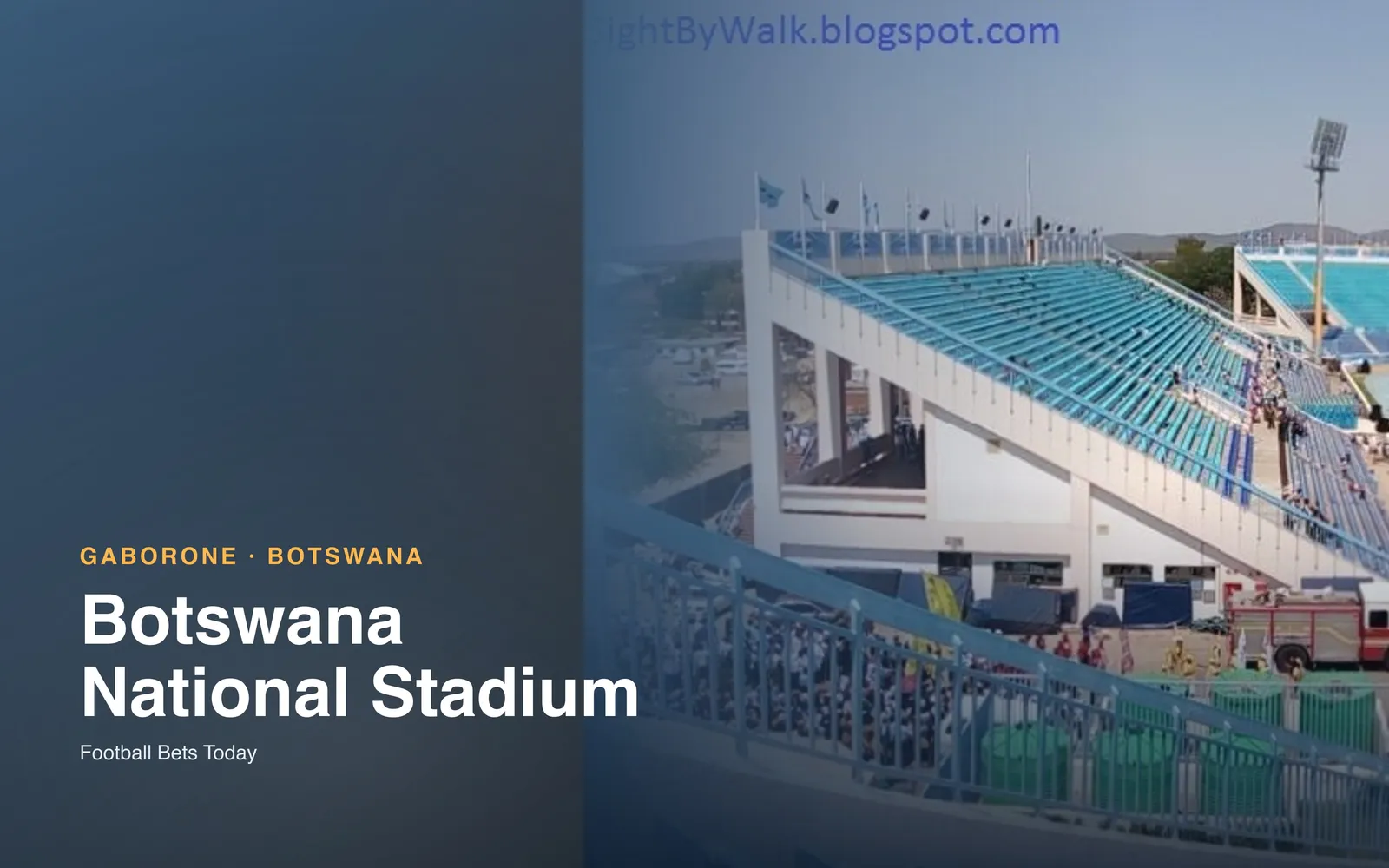
The ground
Facts
| Capacity | 25,000 |
|---|---|
| Opened | 1966 · renovated Closed 2008 for refurbishment, handed to the Botswana National Sports Council in June 2013; expanded in 2016 (about 3,000 seats added) for the 50th independence celebrations |
| Official name | Botswana National Stadium (no sponsor name) |
| Surface | grass |
| Owner | Botswana National Sports Council |
Tenants
Who plays here
- Township Rollers
- Botswana national football team
- Gaborone United
- Notwane
- Mochudi Centre Chiefs
History
Matches it is known for
- 2013: Township Rollers v Extension Gunners, opening match of the 2013/14 Premier League season (Gunners won 1–0)
- 2014: opening and closing ceremonies and athletics of the 2nd African Youth Games
- Independence celebrations (including the 50th, in 2016)
In depth
About Botswana National Stadium
Key takeaways
- Botswana National Stadium is Gaborone’s national football and athletics venue, with capacity of about 25,000 following its 2016 expansion.
- The Botswana national football team are its national team tenants, while club supporters should check the named venue for each home fixture.
- Botswana government news reported provisional CAF Category 3 approval on 18 August 2026, with permanent accreditation still being pursued.
- The stadium hosted the African Youth Games in 2014 and Africa’s first World Athletics Relays in May 2026.
Botswana National Stadium is the national football and athletics ground in Gaborone, with capacity of about 25,000 following its 2016 expansion. It is home to the Botswana national football team and is also listed as a venue for several domestic clubs, giving football and soccer supporters a shared national stage.
A stadium name on a ticket can look straightforward until the same club has fixtures in different cities. Here, the useful distinction is between the ground’s history, its listed tenants and the venue confirmed for an individual match. Capacity, access and CAF approval all matter when planning a visit, especially for supporters travelling into Botswana.
What Is the Capacity of Botswana National Stadium?
Botswana National Stadium holds about 25,000 people after its 2016 expansion, which added approximately 3,000 seats to the previous 22,000. That is the ground’s published capacity, rather than a promise that every event will offer that many tickets. Football and athletics use the same venue differently, so supporters should follow the seating plan and ticket allocation announced for their particular event.
The stadium hosts track and field events as well as football, so the stands serve two different sports. Check the advertised stand and seat details before buying, rather than choosing solely by the stadium’s overall capacity.
Where Is National Stadium Gaborone, and How Do I Get There?
National Stadium Gaborone is in Botswana’s capital and is owned by the Botswana National Sports Council, usually shortened to BNSC. The name refers to the national football and athletics venue. When arranging a journey, use the full name Botswana National Stadium Gaborone and check the destination against your event notice. That is especially useful when a fixture announcement names a different stadium elsewhere in Botswana.
Plan your journey around the entrance specified for the match, with time allowed for ticket checks and the walk to your stand. A taxi or arranged lift needs a clear meeting point for the return journey, too. Consult the organiser’s BFA or BNSC notice for gates, parking arrangements and access changes. Gate and parking details are set for each event by the organiser.
Who Plays Football at Botswana National Stadium?
The Botswana national football team are the ground’s anchor football tenants, while Township Rollers, Gaborone United and Notwane are listed among its club tenants. Mochudi Centre Chiefs also appear in the published tenant list. That establishes their association with the stadium, but it does not establish a permanent home schedule for every club. Read the venue field in the fixtures module before making travel plans.
Which of those clubs actually plays a particular home game here is answered by the confirmed fixture allocation, because domestic and continental matches have different venue requirements. Travelling fans from Lagos, Nairobi, Johannesburg, Accra or Kampala face the same question for national team games, since a home date for Botswana needs a named ground as well as an opponent.
Can the Stadium Host International and CAF Club Football?
Botswana government news reported provisional CAF Category 3 approval on 18 August 2026, allowing senior internationals and what the report called intercontinental club games. Permanent accreditation was still being pursued at that date. This is a dated approval milestone, and the competition and fixture listing remains the place to see where a given match is played. The distinction matters because provisional approval and permanent accreditation describe different stages of the process.
The requirements reach beyond the playing surface. A March 2026 government news report identified dressing rooms on the grandstand side, a media box, electronic ticketing, doping control and medical rooms, and a video operating centre among the Category 3 requirements. These facilities explain why a familiar national ground can still need additional work before hosting certain matches. A capacity figure alone does not answer the international football question.
The August 2026 report estimated that using the upgraded stadium could save the Botswana Football Association about P800,000 per match in travel, security and accommodation costs. That was an expected saving, rather than an audited total for every fixture. For supporters, the practical benefit is easier to picture: approval can allow a home occasion to take place in Gaborone, closer to the communities of southern Botswana’s clubs.
When Was Botswana National Stadium Built and Reopened?
Botswana National Stadium was built in 1965 and opened in 1966, before several later periods of refurbishment and expansion. It closed in 2008 for work intended to prepare it as a training venue for the 2010 World Cup. Delays meant that proposed role did not happen. The refurbished ground was handed back to the Botswana National Sports Council in June 2013, after approximately five years of closure.
Its football return supplies the defining match: Extension Gunners beat Township Rollers 1 to 0 in August 2013. A reopening becomes much more tangible once there is a result attached to it, with supporters able to remember the contest as well as the construction. The ground closed again in 2016 for expansion ahead of Botswana’s 50th independence celebrations on 30 September 2016, when the additional seating raised its published capacity.
| Year | Milestone |
|---|---|
| 1965 | Stadium built |
| 1966 | Stadium opened |
| 2008 | Closed for refurbishment |
| June 2013 | Handed back to BNSC |
| August 2013 | Extension Gunners beat Township Rollers 1 to 0 after reopening |
| 2016 | Expanded to approximately 25,000 capacity |
Which Major African Events Has the Ground Hosted?
The stadium hosted the opening and closing ceremonies and athletics at the African Youth Games from 22 to 31 May 2014. Its role therefore reaches beyond the Botswana national football team and domestic football. A giant screen was installed in the north stand in August 2014, another part of that period of development. These events help explain why the track is central to the ground’s identity, alongside the football pitch.
The World Athletics Relays followed on 2 and 3 May 2026, marking the championships’ first staging in Africa. Botswana won the men’s 4x400m relay in Gaborone in 2:54.47, a championship record, with South Africa second in 2:55.07. That result put two southern African nations on the podium at the same ground where the Botswana national football team play, which gives South African readers a neighbourly reason to follow the stadium. Athletics preparations and CAF football accreditation serve different requirements, so the relay success should be read alongside the dated football approval, with each describing its own use of the stadium.
Why Have Botswana Teams Used Francistown Instead?
Francistown provided an alternative for CAF matches before the Category 3 upgrade. A March 2026 government news report described about P450,000 in charter flight costs for visiting teams and officials when southern clubs hosted continental matches there, with accommodation adding further expense. Venue approval therefore affects the practical meaning of home advantage. Before booking a journey, compare the named ground with the wider football stadiums guide and the match announcement.
How Do Supporters Across Africa Follow Matches Here?
Use the fixtures module for the match, venue and local kick off listing, and read WAT, EAT, SAST and GMT together when sharing plans across countries. Nigeria uses WAT, Kenya and Uganda use EAT, and Ghana uses GMT. South Africa uses SAST and Botswana uses CAT, which is the same UTC+2 offset. A message copied between Lagos and Nairobi needs its time zone attached to remain useful.
Viewing habits differ by country. Kenyan and Ugandan supporters who follow athletics as closely as football can use the same EAT listing for a Relays replay or a Botswana national football team fixture, while Nigerian and Ghanaian readers should convert from WAT or GMT before arranging a watch party. South African fans share Botswana’s clock, so a Gaborone kick off needs no conversion. For a stadium visit, buy through the ticket channel identified in the event announcement and follow its stand and entrance instructions. For viewing elsewhere, check the country specific broadcast information attached to the fixture, since coverage depends on the competition and territory. Super Eagles supporters watching a qualifier and South African fans following a CAF tie need the same final check: read the kick off time in your own zone.
FAQ
What is the capacity of Botswana National Stadium?
Botswana National Stadium has a published capacity of about 25,000 following its 2016 expansion. Approximately 3,000 seats were added to the previous 22,000, although the ticket allocation depends on the event.
Who plays at Botswana National Stadium?
The Botswana national football team are the national team tenants. Township Rollers, Gaborone United, Notwane and Mochudi Centre Chiefs are also listed as tenants, but that list does not confirm their venue for every home game. Check the individual fixture announcement.
How do I get to Botswana National Stadium?
Use Botswana National Stadium in Gaborone as your destination, then follow the entrance instructions in the event notice. Confirm parking or drop off arrangements and organise your return journey before travelling. Check BFA or BNSC match notices for access details.
Is Botswana National Stadium approved for CAF matches?
Botswana government news reported provisional CAF Category 3 approval on 18 August 2026, with permanent accreditation still being pursued at that date. Provisional approval and permanent accreditation are different stages.
What time zone does Botswana National Stadium use?
Botswana uses CAT, which is the same UTC+2 offset as South Africa’s SAST. Nigeria uses WAT, Kenya and Uganda use EAT, and Ghana uses GMT, so read all four alongside any kick off time.
Written by Tunde Akinwande, 2026-11-11.