
EFL Championship · Molineux Stadium, Wolverhampton · est. 1877
Next: Wolverhampton Wanderers v Charlton Athletic. Form: D W W W D W.
 Recent formDWWWDWmost recent first · last six, all competitions
Fixtures
Next fixtures and past results
 Wolverhampton Wanderers
 Port Vale
 Blackburn Rovers
 Preston North End
 Sheffield Wednesday
 Stoke City
 West Ham United
 Birmingham City
 Sheffield United
 Everton
 West Bromwich Albion
 Middlesbrough
 Bolton Wanderers
 Burnley
 Portsmouth
 Watford
 Cardiff City
 Bristol City
 Wrexham
 Charlton Athletic
 Derby County
Head-to-head
Rivals and next opponent
Squad board
Current squad by position
GK
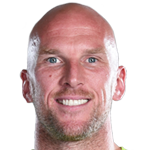 John RuddyEngland
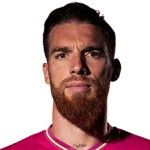 José SáPortugal
 João VirgíniaPortugal
DF
 Ghislain KonanIvory Coast
 Hugo BuenoSpain
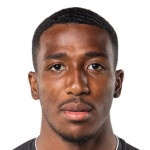 Jackson TchatchouaCameroon
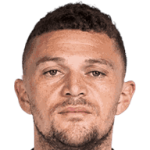 Kieran TrippierEngland
 Ladislav KrejciCzech Republic
 Nasser DjigaBurkina Faso
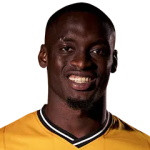 TotiPortugal
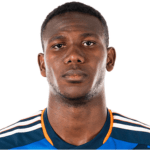 Yerson MosqueraColombia
MF
 AndréBrazil
 Boubacar TraoréMali
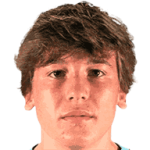 Fernando López GonzálezSpain
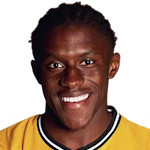 Jean-Ricner BellegardeHaiti
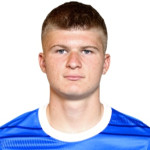 Jordan JamesWales
 Marshall Nyasha MunetsiZimbabwe
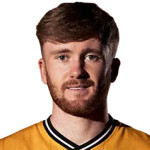 Tommy DoyleEngland
FW
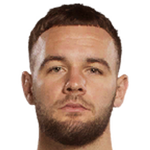 Adam ArmstrongEngland
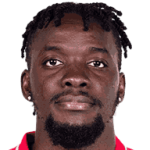 Bertrand TraoréBurkina Faso
 Enso GonzálezParaguay
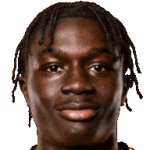 Mateus ManéEngland
 Nathan FraserEngland
 Rafiki SaïdComoros
 Raúl JiménezMexico
 Rodrigo GomesPortugal
 Sean NeaveEngland
 Tawanda Blessing ChirewaEngland
Squad from the data feed, African players highlighted. Updated with every capture.
Home ground: Molineux Stadium, capacity 31,750.
In depth
About Wolverhampton Wanderers
Key takeaways
- Wolves are Wolverhampton Wanderers, a football club from the city of Wolverhampton in England, founded in 1877 as St. Luke's F.C.
- Wolves were champions of England in 1953 to 1954, 1957 to 1958 and 1958 to 1959, all under Stan Cullis, and won the FA Cup in 1893, 1908, 1949 and 1960 and the League Cup in 1974 and 1980.
- Molineux has been the home of Wolves since 1889, and its record crowd of 61,315 came against Liverpool on 11 February 1939.
- Fosun International bought the parent company of Wolves on 21 July 2016, and the club won the Championship in 2017 to 2018 to return to the Premier League.
- For Wolves viewers, an English winter kick off at 15:00 translates to GMT 15:00, WAT 16:00, SAST 17:00 and EAT 18:00.
Wolves are Wolverhampton Wanderers, a football club from the city of Wolverhampton in England, founded in 1877 as St. Luke's F.C. and given its present name in 1879. Under Stan Cullis, they were champions of England in 1953 to 1954, 1957 to 1958 and 1958 to 1959. Their four FA Cup victories came in 1893, 1908, 1949 and 1960, and they have played at Molineux since 1889. South African readers who follow soccer can also explore the club's African connections through former players such as Nigeria's Seyi Olofinjana and Morocco's Romain Saïss.
Use the Wolves table to compare games played, points and goal difference. Open the Wolves fixtures for scheduled matches and local viewing times, then consult the results for completed scores. The squad module identifies registered players, their positions and nationalities, helping readers across Nigeria, Kenya, South Africa, Ghana and Uganda follow African representation at Molineux.
Who Are Wolves of Wolverhampton?
Wolves is a shortened form of Wolverhampton, the city in the English Midlands that gives Wolverhampton Wanderers their name. The club began as St. Luke's F.C. in 1877, took the Wanderers name in 1879 and, in 1888, became one of the twelve founder members of the Football League.
How Did Wolves Climb Back to the Premier League?
Check the competition named in the Wolves table module to identify their division this season. Their promotion history includes the Championship title in 2008 to 2009 and another route from the third tier: Wolves went on to win League One in 2013 to 2014 and the Championship in 2017 to 2018, securing a return to the Premier League.
How Do You Follow Wolves Fixtures, Results and the Table From Africa?
For a scheduled Wolves match, read the competition, venue and start time in the fixtures module, with Wolves viewing times grouped under WAT, EAT, SAST and GMT. After the match, the results module supplies the score and scorers. In the table, or log, compare points alongside games played and goal difference to understand Wolves' standing. Use the broadcaster information beside each fixture to check viewing options for Nigeria, Kenya, South Africa, Ghana or Uganda, and set your reminder using the relevant local time.
How Is the Wolves Squad Set Out?
Find a Wolves player by selecting his position group in the squad module, then read the number and nationality attached to his entry. The head coach appears above the player listings, while registration updates keep the squad details relevant. To explore African representation, read each player's nationality rather than inferring it from his name; consult the dated player connections below for examples from Wolves' history.
What Have Wolves Won?
Wolves have won the English league title three times, all under Stan Cullis, in 1953 to 1954, 1957 to 1958 and 1958 to 1959. They have also lifted the FA Cup four times (1893, 1908, 1949 and 1960) and the League Cup twice (1974 and 1980), and the modern second and third tier titles sit beside those in the table below. In my opinion, the 1950s run is the heart of the whole story. Three league titles across six seasons placed Wolves at the very top of English football, and the club's floodlit nights of the same decade carried that success to an audience well beyond the Midlands.
The European record adds a further layer to that honours list. Wolves reached the European Cup quarter finals in 1959 to 1960 and the Cup Winners' Cup semi finals in 1960 to 1961, and in 1972 they played in the first UEFA Cup final, finishing as runners up to Tottenham Hotspur, with an aggregate score of 3 to 2. That final deserves more credit than a runners up line usually earns, because reaching the first edition's decider puts Wolves inside the founding story of a competition that still runs today. For anyone comparing clubs in a viewing centre argument, the honours are the fixed part, since form comes and goes on the results module while the title of 1958 to 1959 remains part of Wolves' history.
| Honour | Times | Seasons |
|---|---|---|
| English league champions (top flight) | 3 | 1953 to 1954, 1957 to 1958, 1958 to 1959 |
| FA Cup | 4 | 1893, 1908, 1949, 1960 |
| League Cup | 2 | 1974, 1980 |
| Championship (second tier) | 2 | 2008 to 2009, 2017 to 2018 |
| League One (third tier) | 1 | 2013 to 2014 |
| UEFA Cup runners up | 1 | 1972 |
| European Cup quarter finals | 1 | 1959 to 1960 |
| Cup Winners' Cup semi finals | 1 | 1960 to 1961 |
From St. Luke's to Molineux: The History in Brief
Molineux has been home since 1889, and its record crowd of 61,315 came for a match against Liverpool on 11 February 1939. The ground stands in the city of Wolverhampton itself. Steve Bull scored a club record 306 goals during his Wolves career from 1986 to 1999, and the former John Ireland Stand was renamed the Steve Bull Stand in 2003. In 1953 Wolves installed floodlights, and between 1953 and 1956 they hosted televised friendlies under them against visiting overseas sides, including their celebrated victory over Honvéd of Hungary in December 1954. If I had to choose one defining match for the club, that Honvéd night would be it, because it showed that a game at Molineux could travel to a screen far from the stadium.
Stan Cullis is the name behind the golden decade, and his sixteen years as manager ended in September 1964. The modern chapter began on 21 July 2016, when Fosun International bought the club's parent company, and the Championship title of 2017 to 2018 followed within two seasons. Perhaps the fairest way to read Wolves is as a long line with several high points along it: a founding place in 1888, the titles of the 1950s, the League Cups of 1974 and 1980 and the return to the top flight in 2018.
Why Do Wolves Have Fans Across Africa?
Nigeria international Seyi Olofinjana played for Wolves from 2004 to 2008, giving Super Eagles followers a direct connection to the club's midfield. Senegal international Henri Camara joined Wolves in 2003 and played in their Premier League campaign of 2003 to 2004 before loan spells elsewhere and his departure in 2005.
Morocco international Romain Saïss represented Wolves from 2016 to 2022 and was part of the Championship title squad in 2017 to 2018. Alongside Olofinjana and Camara, his career provides a dated African connection for readers in Nigeria, Kenya, South Africa, Ghana and Uganda to explore through the club's history.
Wolves also have a documented place in televised football history. Between 1953 and 1956, their floodlit friendlies at Molineux brought visiting overseas teams to television audiences, including Honvéd in December 1954. That record offers historical context for following the club on screen; use the fixture times and broadcaster details to plan your own viewing.
Who Are the Wolves Rivals in the Black Country Derby?
The Black Country derby against West Bromwich Albion is the main rivalry, a meeting of two clubs from the same industrial corner of the Midlands with only a short drive between them. Aston Villa are the other old neighbour, and that link is written into the record book, because Wolves and Villa met on 8 September 1888 in the opening round of Football League fixtures. A Lagos comparison fits the derby well: it feels like an argument between two families on the same street, close enough to know each other's business and proud enough never to admit it. Check the fixtures module for the competition, because the derby is played whenever the clubs share a division or meet in a cup.
Which Wolves Games Matter Most, and What Time Do They Start?
The derbies with West Bromwich Albion and Aston Villa are established local fixtures to look for in Wolves' schedule. African viewers can also use the squad details to identify players representing national teams they follow. Read the competition label and venue before choosing a match to watch: Wolves' cup history includes FA Cup wins in 1893, 1908, 1949 and 1960 and League Cup wins in 1974 and 1980.
A 15:00 winter start in England means Wolves viewers in Nigeria tune in at 16:00 WAT, those in Kenya and Uganda at 18:00 EAT, those in South Africa at 17:00 SAST and those in Ghana at 15:00 GMT. When a Wolves match begins at 15:00 during British Summer Time, Ghana's GMT clock reads 14:00, Nigeria's WAT clock reads 15:00, South Africa's SAST clock reads 16:00 and the EAT clocks in Kenya and Uganda read 17:00. Match your Wolves reminder to the fixture's entry for your local zone.
FAQ
What does Wolves stand for in football?
Wolves is a shortened form of Wolverhampton, referring to Wolverhampton Wanderers. The club began as St. Luke's F.C. in 1877 and adopted the Wolverhampton Wanderers name in 1879.
How many league titles have Wolves won?
Wolves won three English top flight titles under Stan Cullis: in 1953 to 1954, 1957 to 1958 and 1958 to 1959.
Which African players have played for Wolves?
Examples include Nigeria international Seyi Olofinjana, whose Wolves career ran from 2004 to 2008; Senegal international Henri Camara, who joined in 2003 and departed in 2005; and Morocco international Romain Saïss, who represented the club from 2016 to 2022.
Where can I find the Wolves squad and player nationalities?
Open the Wolves squad module and select a position group. Each player entry includes his nationality and shirt number, with registration changes reflected in the module.
What time do Wolves matches start in Africa?
Each Wolves fixture carries four clock readings covering WAT, EAT, SAST and GMT. A winter start of 15:00 in England puts Wolves on screen at 16:00 for WAT viewers, 18:00 for EAT viewers, 17:00 for SAST viewers and 15:00 for GMT viewers. With British Summer Time in effect, a Wolves start of 15:00 means 15:00 in WAT, 17:00 in EAT, 16:00 in SAST and 14:00 in GMT.
Who are Wolves' main rivals?
West Bromwich Albion are Wolves' opponents in the Black Country derby. Aston Villa are another established local rival; Wolves and Villa met in the opening round of Football League fixtures on 8 September 1888.
Written by Tunde Akinwande, 2026-11-10.