La Liga · Estadio Ramón Sánchez-Pizjuán, Seville · est. 1890
Next: Sevilla v Real Betis. Form: D L W W L D.
 Recent formDLWWLDmost recent first · last six, all competitions
Fixtures
Next fixtures and past results
 Rayo Vallecano
 Athletic Club
 Atlético de Madrid
 Espanyol
 Valencia
 Deportivo A Coruña
 Barcelona
 Levante
 Real Madrid
 Osasuna
 Sporting Hortaleza
 Getafe
 Deportivo Alavés
 Real Betis
Squad board
Current squad by position
GK
 Francisco Javier González PérezSpain
 Odysseas VlachodimosGreece
DF
 Andrés CastrínSpain
 Arouna SanganteSenegal
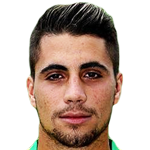 Fábio CardosoPortugal
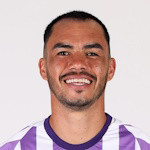 Gabriel SuazoChile
 José Ángel CarmonaSpain
 Juan IglesiasSpain
 Julio DíazSpain
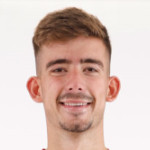 Kike SalasSpain
 MarcãoBrazil
MF
 Giorgi KochorashviliGeorgia
 Jon GuridiSpain
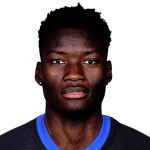 Lucien AgouméFrance
 Manu BuenoSpain
- Nico GuillénSpain
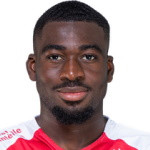 Youssouf FofanaFrance
FW
 Alfon GonzálezSpain
 Chidera EjukeNigeria
 Félix CorreiaPortugal
 Isaac RomeroSpain
 Lucas StassinBelgium
- Miguel Ángel Sierra OrtegaSpain
 Peque FernándezSpain
 Robbie UreScotland
 Rubén VargasSwitzerland
Squad from the data feed, African players highlighted. Updated with every capture.
In depth
About Sevilla
Key takeaways
- Sevilla are a Spanish football club from Seville, founded on 25 January 1890, who play at the Ramón Sánchez-Pizjuán.
- Sevilla have won the UEFA Cup and Europa League a record seven times: 2006, 2007, 2014, 2015, 2016, 2020 and 2023.
- Sevilla's only La Liga title came in 1945-46, and they won the Copa del Rey in 1935, 1939, 1948, 2007 and 2010.
- Gambian winger Biri Biri became Sevilla's first Black player in 1973, and Malian striker Frédéric Kanouté scored in the 2006 UEFA Cup final win.
- Nigerian striker Akor Adams joined Sevilla from Montpellier in January 2025 on a five year deal.
Sevilla are a Spanish football club from Seville, founded on 25 January 1890 as Sevilla Foot-ball Club, and they play at the Ramón Sánchez-Pizjuán. They are best known for winning the UEFA Cup and Europa League a record seven times between 2006 and 2023. For South African readers who use the word soccer, Sevilla's African connections include Biri Biri and Frédéric Kanouté. This guide covers the Sevilla squad, how to read Sevilla predictions, the honours, the Seville derby and the African players who have worn the white shirt.
Sevilla's honours include the Spanish league title in 1945-46 and seven UEFA Cup and Europa League titles between 2006 and 2023. Explore upcoming dates through Sevilla fixtures, with the club's history and African connections providing context for readers in Nigeria, Kenya, South Africa, Ghana and Uganda.
Who Are Sevilla FC, the Kings of the Europa League?
Sevilla are the most successful club in the history of the UEFA Cup and Europa League, and that record defines them more than anything they have done at home. They were founded on 25 January 1890. They have one Spanish league title, from 1945-46, but their reputation rests on knockout football in Europe, where they lifted the trophy in 2006, 2007, 2014, 2015, 2016, 2020 and 2023. In my opinion, that run explains the club better than any league table could. Sevilla won consecutive Europa League titles in 2014, 2015 and 2016.
How Is the Sevilla Squad Set Out?
Read Sevilla's squad information by comparing each player's position with their shirt number. Squads change in every transfer window, so consult the squad module to check registrations for this season. Chidera Ejuke and Akor Adams have both been part of the Sevilla story, with Adams arriving from Montpellier in January 2025 on a five year deal. A listed position provides a starting point for understanding a player's role; the team selection gives the context for an individual match.
How Do Sevilla Predictions Work, and How Should You Read Them?
Read a Sevilla prediction as a call expressed through a probability and a reference price. A probability of 55% corresponds to a reference decimal price of about 1.82 before any bookmaker margin. It describes an estimated chance, so the other outcomes remain possible. When assessing a call, consider Sevilla's opponent, the venue and whether the fixture is a league match or a knockout tie. Betting content is for readers aged 18+.
How Do You Follow Sevilla Fixtures, Results and the Table From Africa?
Follow Sevilla by reading the fixture dates alongside completed results and the La Liga table, also called the log in South Africa. Check the competition attached to each result: Sevilla's league campaign and their cup ties have separate consequences. For readers in Nigeria, Kenya, South Africa, Ghana and Uganda, compare kick off times across WAT, EAT, SAST and GMT using the Spanish time conversion below.
What Have Sevilla Won?
Sevilla have won one La Liga title, five Copa del Rey trophies, seven UEFA Cup and Europa League titles, the UEFA Super Cup and the Supercopa de España. The league title came in 1945-46. The Copa del Rey wins arrived in 1935, 1939, 1948, 2007 and 2010, which shows two golden periods separated by almost six decades. The UEFA Super Cup came in 2006, the same year as the first UEFA Cup, and the Supercopa de España followed in 2007. In 2006 and 2007, Sevilla won two UEFA Cups, the UEFA Super Cup, the Copa del Rey and the Supercopa de España.
The European record is the part worth quoting. Seven wins in the UEFA Cup and Europa League (2006, 2007, 2014, 2015, 2016, 2020 and 2023) is the most by any club, and three of them came in consecutive seasons from 2014 to 2016. In my opinion, few clubs anywhere have made one competition feel so much like home. Kanouté's goal in the 2006 final gives that honours list a direct Malian connection.
From 1890 to the Sánchez-Pizjuán: Where Do Sevilla Play, and Who Are Their Rivals?
Sevilla play at the Ramón Sánchez-Pizjuán, which opened on 7 September 1958 with a friendly against Real Jaén. The ground has been the setting for the club's modern European era, and its sound is tied to 'El Arrebato', the Centennial Anthem composed in 2005 by Javier Labandón.
Sevilla's city rival is Real Betis, and their meeting is known as the Seville derby. When comparing derby results, distinguish La Liga meetings from Copa del Rey ties, then check the venue and date of each match.
Why Do African Fans Follow Sevilla?
Sevilla's African story begins in 1973, when the Gambian winger Biri Biri signed and became the club's first Black player. He stayed until 1978, which gives the club a piece of African heritage that runs back decades before the modern transfer market. For Gambian and wider West African readers, he is the name to know first. He was a forward who opened a door that many players from the continent have since walked through.
Frédéric Kanouté is the defining African figure of the club's European era, and the 2006 UEFA Cup final is the match I would choose to explain Sevilla to anyone. The Malian striker scored in that final win, which was the first of the seven European titles.
Sevilla's Nigerian connections include Akor Adams, Chidera Ejuke and Kelechi Iheanacho, whose paths overlapped when Adams joined in January 2025. Akor Adams joined from Montpellier in January 2025 on a five year deal. Adams said Ejuke encouraged him to join Sevilla in January 2025. The move made him the third Nigerian at the club at that time, after Ejuke and Kelechi Iheanacho. Players move, so check the squad module before treating any of them as a current Sevilla player.
Which Sevilla Record Is Worth Knowing?
Toni Polster scored 33 league goals in 1989-90. His scoring season predates Sevilla's first UEFA Cup triumph in 2006 and adds another chapter to the club's attacking history. When comparing scoring figures, distinguish league goals from totals across all competitions.
Where Can You Watch Sevilla, and What Time Do They Kick Off?
To watch Sevilla from Nigeria, Kenya, South Africa, Ghana or Uganda, check your local television or streaming schedule for the competition concerned, because broadcast rights can change between seasons. Spain runs on Central European Time, which is one hour ahead of GMT in winter and two hours ahead in summer. In winter, a Spanish evening game starts at the same hour in Lagos, one hour later in Johannesburg and two hours later in Nairobi and Kampala.
For a Sevilla fixture scheduled at 21:00 in Spain, the conversion depends on whether Spain is observing winter or summer time. Read the corresponding row below to compare WAT, EAT, SAST and GMT together, then check the confirmed date and time for the individual fixture.
| Spanish clock setting | Start in Spain | Nairobi and Kampala (EAT) | Accra (GMT) | Johannesburg (SAST) | Lagos (WAT) |
|---|---|---|---|---|---|
| Winter: GMT+1 | 21:00 Spanish time | EAT: 23:00 | GMT: 20:00 | SAST: 22:00 | WAT: 21:00 |
| Summer: GMT+2 | 21:00 Spanish time | EAT: 22:00 | GMT: 19:00 | SAST: 21:00 | WAT: 20:00 |
FAQ
Which African players have played for Sevilla?
Sevilla's African connections include Gambian winger Biri Biri, who joined in 1973, and Malian striker Frédéric Kanouté, who scored in the 2006 UEFA Cup final. Nigerian connections include Akor Adams, Chidera Ejuke and Kelechi Iheanacho, whose paths overlapped in January 2025.
When did Sevilla win the Spanish league and Copa del Rey?
Sevilla won the Spanish league in 1945-46. Their Copa del Rey victories came in 1935, 1939, 1948, 2007 and 2010.
Who are Sevilla's derby rivals?
Real Betis are Sevilla's city rivals. Their fixture is known as the Seville derby.
What time is a 21:00 Sevilla match in Africa?
When Sevilla start at 21:00 under Spain's winter clock, the African equivalents are 21:00 WAT in Nigeria, 23:00 EAT in Kenya and Uganda, 22:00 SAST in South Africa and 20:00 GMT in Ghana. During Spanish summer time, a 21:00 start in Seville means Ghana watches at 19:00 GMT, Kenya and Uganda at 22:00 EAT, Nigeria at 20:00 WAT and South Africa at 21:00 SAST.
Written by Tunde Akinwande, 2026-11-10.