Primeira Liga · Estádio do Dragão, Porto · est. 1893
Next: to be confirmed. Form: W W W W W W.
 Recent formWWWWWWmost recent first · last six, all competitions
Fixtures
Next fixtures and past results
 Alverca
 Rio Ave
 Arouca
 Academico Viseu
 Moreirense
 Casa Pia
 Benfica
 Marítimo
 Gil Vicente
 Estoril
 Vitória Guimarães
Squad board
Current squad by position
GK
 Cláudio RamosPortugal
 Diogo CostaPortugal
 João CostaPortugal
DF
 Alberto CostaPortugal
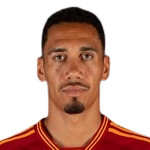 Chris SmallingEngland
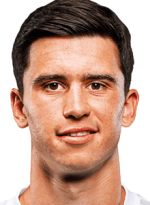 Dominik PrpićCroatia
 Francisco MouraPortugal
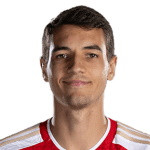 Jakub KiwiorPoland
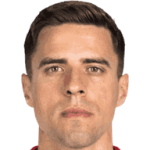 Jan BednarekPoland
 Martim FernandesPortugal
 Nehuén PérezArgentina
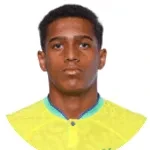 SouzaBrazil
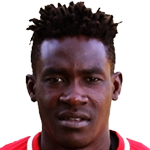 Zaidu SanusiNigeria
MF
 Alan VarelaArgentina
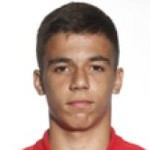 Gabri VeigaSpain
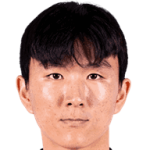 In-beom HwangSouth Korea
 Pablo RosarioNetherlands
 Seko FofanaIvory Coast
 Vasco SousaPortugal
 Victor FroholdtDenmark
FW
 André SilvaPortugal
 Borja SainzSpain
 Duarte CunhaPortugal
 Gabriel MecBrazil
 Oskar PietuszewskiPoland
 PepêBrazil
 Samu AghehowaSpain
 Santiago GimenezMexico
 William GomesBrazil
Squad from the data feed, African players highlighted. Updated with every capture.
In depth
About FC Porto
Key takeaways
- FC Porto, founded on 28 September 1893, are a Portuguese football club nicknamed the Dragões (Dragons) who play at the Estádio do Dragão.
- Porto won the European Cup in 1987 and the Champions League in 2004. Their international honours include European titles in 1987, 2003, 2004 and 2011.
- Porto, Benfica and Sporting CP are the three Portuguese clubs never relegated from the top flight, and Porto against Benfica is known as O Clássico.
- South African striker Benni McCarthy joined Porto in 2003 and was part of the squad that won the 2004 Champions League, while Algeria's Rabah Madjer was a key figure in the 1987 European Cup final win.
- A 20:00 winter start at the Dragão means Ghana watches at 20:00 GMT, South Africa at 22:00 SAST, Nigeria at 21:00 WAT, and Kenya and Uganda at 23:00 EAT.
FC Porto, in full Futebol Clube do Porto, are a football club from the city of Porto in northern Portugal, founded on 28 September 1893 and known as the Dragões, or Dragons. They won the European Cup in 1987 and the Champions League in 2004, and they stand with Benfica and Sporting CP as one of the Big Three that have never been relegated from the Portuguese top flight. So, if you typed Porto soccer in Johannesburg or FC Porto in Lagos, you have landed on the same club, and what follows covers the table, the squad, the honours, the rivals and the African players who have worn the stripes.
Porto’s African connections include Benni McCarthy, part of their 2004 Champions League winning squad, and Rabah Madjer, a key figure in their 1987 European Cup final victory. South African readers know the story through Benni McCarthy, who joined in 2003, and Nigerian readers have a way in through Chidozie Awaziem, who made his Porto first team debut in 2016, so the African thread runs through everything below.
Who Are FC Porto, the Dragons?
FC Porto were founded in 1893 by António Nicolau de Almeida, a port wine merchant, and revived in 1906 after a period without activity. They play in blue and white striped shirts with blue shorts, which is where the second nickname, Azuis e brancos (the Blue and Whites), comes from, although Dragões is the name you will hear most often. Porto, Benfica and Sporting CP are the only three Portuguese clubs never relegated from the top division. Porto won the European Cup in 1987 and the Champions League in 2004. Those two triumphs connect Algeria’s Rabah Madjer, who scored in the 1987 final, with South Africa’s Benni McCarthy, a member of the victorious 2004 squad. For an African reader, the simplest way to place them is as the northern pillar of Portuguese football, with Lisbon holding the other two.
Where Are the FC Porto Standings, Results and Predictions?
The live modules at the top hold everything that changes after a match, starting with the Porto fixtures, the latest results and the Porto FC standings in the Primeira Liga table, or log, as South African readers would call it. Read the table across rather than down: points first, then matches played, then goal difference, because a side with a game in hand can look lower than it really is. Porto predictions sit beside each upcoming game as an editorial call, given as a probability with a reference price, and never as a promise about any result. So, if you only want to know where Porto stand and who comes next, the modules answer that faster than any paragraph could, and they update themselves after every final whistle.
How Is the FC Porto Squad Set Out?
Porto’s squad display groups goalkeepers, defenders, midfielders and forwards separately, pairing names with nationalities and shirt numbers beneath the coaching information. Registration changes feed into those entries during transfer periods. Nationality offers African readers a useful starting point: Chidozie Awaziem made his Porto first team debut in 2016, according to his Wikipedia biography. Nigerian readers can use the updated entries to identify any compatriots representing Porto this season.
What Have FC Porto Won in Europe and at Home?
Porto's European record is the part of the honours list whose meaning never changes: the European Cup in 1987, the UEFA Cup in 2003, the Champions League in 2004 and the Europa League in 2011, plus the Intercontinental Cup in 1987 and 2004 and the UEFA Super Cup in 1987. The competition names distinguish the two European trophy routes, while the years let readers trace each success in the honours table. José Mourinho, in charge from 2002 to 2004, won the league, the UEFA Cup and the Taça de Portugal in the 2002 to 2003 season before lifting the Champions League in 2004. The club then went unbeaten through the league in the 2010 to 2011 season and again in the 2012 to 2013 season. Domestic totals keep growing, so the records module carries the live count.
| Competition | What it is | Porto wins |
|---|---|---|
| European Cup and Champions League | Europe's top club competition | 1987, 2004 |
| UEFA Cup and Europa League | Europe's second club competition | 2003, 2011 |
| Intercontinental Cup | A final between the club champions of Europe and South America | 1987, 2004 |
| UEFA Super Cup | A final between Europe's champions and another European cup winner | 1987 |
| Primeira Liga | Portugal's top division, decided on points | Live count in the records module |
| Taça de Portugal | Portugal's main knockout cup | Live count in the records module |
| Supertaça Cândido de Oliveira | Portugal's season opener, champions against cup winners | Live count in the records module |
Benfica, Sporting and the Big Three: Who Are Porto's Rivals?
Benfica are the main rival, and the meeting between the two is known as O Clássico, one of Porto’s main rivalries. Sporting CP complete the Big Three, and with both of them based in Lisbon, every trip south carries a sense of the north standing up for itself. Boavista, from the same city, are the local rival, which gives Porto a derby on their own doorstep as well as the national one. It could be argued that it resembles an Enyimba and Kano Pillars debate in a Lagos viewing centre, where the football is only half of the conversation and regional pride fills the rest.
So, why do Porto matter in Portugal beyond the rivalries? Because they gave Portuguese football a northern centre of gravity, and their European wins in 1987 and 2004 handed the north a story of its own. A league win earns three points, and its effect on the title race depends on the table and other results.
How Big Is the Estádio do Dragão, and How Do Fans Get There?
The Estádio do Dragão has been Porto's home since 2003 and holds 50,033 supporters. It replaced the Estádio das Antas, the old ground, and the move gave the club a new home in time for the run to the Champions League title in 2004. Fans reach it most easily on the city's metro, which has a stop named after the stadium, and match tickets are sold through the club's official channels. For anyone travelling from Africa, that metro link is the practical detail worth knowing, because it saves a long search for parking on a busy night.
If you are planning a trip from Africa, allow for the time difference set out further down, and check the fixture again close to the day, because league kick off times can be confirmed only a few weeks ahead. In my opinion, the Dragão is the place to see Porto against Benfica, since that is the night the ground was built for, with the blue and white of the home support filling every stand. Any other league game is a gentler introduction, and perhaps the better choice for a first visit with family.
Why Should African Fans Care About FC Porto?
Benni McCarthy gives South African readers a direct connection to Porto through the 2004 Champions League winning squad. The Bafana Bafana striker signed in 2003 and was part of the squad that won the 2004 Champions League under José Mourinho, which put a South African name on the biggest club medal in Europe. For PSL followers that link still matters, because it showed that a striker raised in South African football could hold his place in a European champion's dressing room.
Rabah Madjer, though, came first, and the Algerian forward was a key figure in the 1987 European Cup final win, the night Porto became champions of Europe for the first time. His role in the 1987 European Cup final is a central part of Porto’s African connection. Yacine Brahimi of Algeria and Vincent Aboubakar of Cameroon joined Porto in 2014, while Moussa Marega of Mali joined in 2016, as recorded in their Wikipedia biographies.
For Nigerian readers, Chidozie Awaziem offers another connection: the Super Eagles defender made his Porto first team debut in 2016, as recorded in his Wikipedia biography. The squad module shows by nationality whether any Nigerian is in the shirt this season. Readers in Kenya and Uganda can read fixture times in EAT, while readers in Ghana can use GMT. Benni McCarthy’s Wikipedia biography records his move from Porto to Blackburn Rovers in 2006, following his part in Porto’s 2004 Champions League triumph.
How Do You Watch Porto From Africa, and What Time Do They Kick Off?
The Dragons’ fixture entries carry country specific coverage details for African supporters arranging their viewing. A winter evening beginning at 20:00 beside the Douro has these local kick off times: South Africa, 22:00 SAST; Nigeria, 21:00 WAT; Ghana, 20:00 GMT; Kenya and Uganda, 23:00 EAT. With Portugal observing its summer clock, a 20:00 start for Porto means viewers in Kenya and Uganda tune in at 22:00 EAT, while Nigeria watches at 20:00 WAT. Ghana watches that summer fixture at 19:00 GMT, while South African viewers have a 21:00 SAST kick off. The converted times alongside Porto fixtures give supporters in Nairobi and Kampala a practical guide when a European evening extends towards midnight.
Porto, FC Porto or Porto Alegre: Which One Is the Football Club?
Porto is the city and FC Porto is the club, and the two are easy to mix up in a search bar. The city sits in northern Portugal and gave its name to port wine, which feels fitting given that the club's founder traded in it. Porto Alegre is a different place altogether, a city in southern Brazil with football clubs of its own, so results from there have nothing to do with the Dragons. If a score or a fixture looks unfamiliar, the country beside the club name is usually the quickest clue that you have found the wrong Porto.
Other clubs carry the Porto name too, and Boavista, the local rival, play in the same city, which adds to the confusion when a headline simply says Porto. So, the surest check is the full name, Futebol Clube do Porto, alongside the dragon on the badge and the blue and white stripes. If you searched for Porto standings or Porto predictions and landed on a different side, the club name in each module header settles it, and the fixtures link near the top takes you straight to the Dragons' schedule.
FAQ
Where can I find FC Porto standings and results?
Use the standings and results modules for Porto’s updated league position and completed matches. Points, appearances and goal difference help explain the table, while the squad’s nationality entries identify its African connections.
Which African players helped Porto win European titles?
Algeria’s Rabah Madjer scored in Porto’s 1987 European Cup final victory. South Africa’s Benni McCarthy belonged to the squad that won the Champions League in 2004.
What time is a 20:00 Porto kick off in African countries?
For Porto’s 20:00 fixtures under Portugal’s winter clock, Ghana has a 20:00 GMT kick off, South Africa a 22:00 SAST start, Nigeria a 21:00 WAT start, and Kenya and Uganda a 23:00 EAT kick off. Under Portugal’s summer clock, read the local times as follows: Kenya and Uganda, 22:00 EAT; Nigeria, 20:00 WAT; South Africa, 21:00 SAST; Ghana, 19:00 GMT.
Where can readers in Africa watch FC Porto?
Porto supporters can find country specific viewing options within the fixture listings. Use the Dragons’ displayed WAT, EAT, SAST and GMT conversions when arranging your viewing.
Written by Tunde Akinwande, 2026-11-10.